In this Article
- Serum or Moisturizer First?
- Understanding the Basics of Layering Skincare
- What Does a Serum Do?
- What Does a Moisturizer Do?
- Serum vs Moisturizer: Quick Comparison
- How to Layer Serum and Moisturizer Correctly
- Adjustments Based on Skin Concerns
- Skin Type Guidance: Customize Your Order
- Do You Always Need Both?
- Can Moisturizer Replace Serum?
- Recommended Products and Routine Pairings
- Simplified and Budget-Friendly Alternatives
- Frequently Asked Questions (FAQ)
- Expert Takeaway: The Correct Order Builds Results
- Keep The Vibe Going
Serum or Moisturizer First?
Apply serum first, then moisturizer. Serums contain concentrated actives designed to penetrate deeply, while moisturizers seal hydration and strengthen the skin barrier. Layering in this order maximizes absorption, improves glow, and enhances results for fine lines, pigmentation, and overall skin health.
If you’ve ever wondered about the correct order in your routine, this guide clarifies exactly how and why layering works.
Understanding the Basics of Layering Skincare
The confusion around serum or moisturizer first usually comes from not understanding their distinct roles. Each product has a different molecular structure, texture, and purpose.
What Does a Serum Do?
A serum is a lightweight, fast-absorbing formula packed with high concentrations of active ingredients.
Common serum actives include:
- Vitamin C for glow and pigmentation
- Hyaluronic acid for hydration
- Niacinamide for oil control
- Retinol for fine lines and texture
- Peptides for firming
Because serums have smaller molecules, they penetrate deeper into the skin. They target specific concerns like dullness, dark spots, dehydration, and aging.
In short, serums treat.
What Does a Moisturizer Do?
A moisturizer is thicker and more emollient. Its primary functions are:
- Lock in hydration
- Strengthen the skin barrier
- Prevent transepidermal water loss
- Improve softness and comfort
Moisturizers contain humectants, emollients, and occlusives. These ingredients work together to seal in the benefits of your serum.
In short, moisturizers seal and protect.
Serum vs Moisturizer: Quick Comparison
| Feature | Serum | Moisturizer |
| Texture | Lightweight, fluid | Creamy, gel, or lotion |
| Purpose | Treat specific concerns | Lock in moisture |
| Active concentration | High | Moderate |
| Penetration level | Deep | Surface-level |
| When to apply | Before moisturizer | After serum |
Core principle: Layer skincare from the lightest, most fluid texture to the richest, most occlusive formula.
For a deeper breakdown, see our guide on Serum vs Moisturizer: Which One Does Your Skin Actually Need?
How to Layer Serum and Moisturizer Correctly
Correct layering improves absorption and prevents product pilling. Follow this simple structure.
Step-by-Step Skincare Order
- Cleanser – Remove dirt, oil, and makeup.
- Toner (optional) – Prep and balance the skin.
- Serum – Apply 2–3 drops. Gently press into skin.
- Moisturizer – Seal hydration and support the skin barrier.
- Sunscreen (AM only) – Protect against UV damage.
Wait about 30–60 seconds between serum and moisturizer. This prevents dilution.
Why Serum Goes First
If you apply moisturizer first, you create a barrier that limits serum penetration. That reduces effectiveness, especially for actives targeting:
- Fine lines
- Pigmentation
- Acne
- Dehydration
Therefore, layering serum first ensures deeper delivery.
Adjustments Based on Skin Concerns
However, not all routines are identical.
- Using retinol? Apply on dry skin at night, then moisturizer.
- Using strong exfoliating acids? Apply serum, wait 2 minutes, then moisturize.
- Very sensitive skin? Try the “moisturizer sandwich” technique (moisturizer → serum → moisturizer).
Explore our guide on How to Layer Actives Safely for more advanced combinations.
Skin Type Guidance: Customize Your Order
The rule remains serum first, moisturizer second. But the formula selection changes.
Oily Skin Tips
If you have oily skin:
- Choose lightweight gel serums.
- Use oil-free or gel moisturizers.
- Look for niacinamide and salicylic acid.
Avoid heavy creams that clog pores.
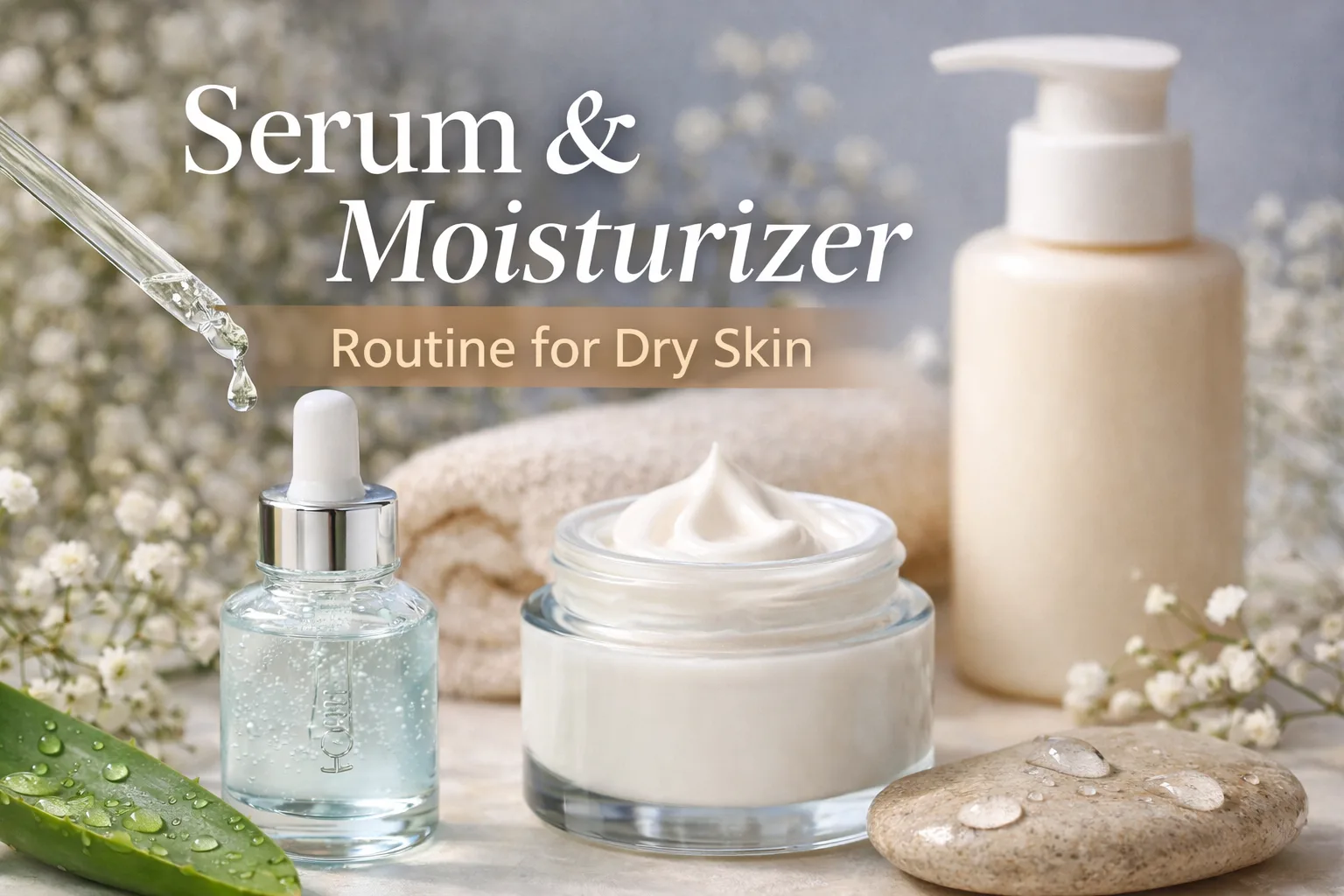
Dry Skin Tips
Dry skin benefits from:
- Hyaluronic acid serums
- Ceramide-rich moisturizers
- Cream-based textures
Apply serum on slightly damp skin to boost hydration.
Sensitive Skin Tips
Sensitive skin requires:
- Fragrance-free formulas
- Minimal active layering
- Barrier-repair moisturizers
Use soothing ingredients like centella asiatica and panthenol.
Acne-Prone Skin Tips
For acne-prone skin:
- Apply treatment serum first (salicylic acid or benzoyl peroxide).
- Follow with non-comedogenic moisturizer.
- Avoid skipping moisturizer. Dehydration increases oil production.
Do You Always Need Both?
Not necessarily. It depends on your goals.
If your skin is balanced and concern-free, a moisturizer alone may suffice. However, if you want to target:
- Pigmentation
- Early aging
- Texture
- Persistent dullness
You likely need a serum.
Think of serum as targeted therapy. Moisturizer is maintenance.
Can Moisturizer Replace Serum?
No, not fully.
Moisturizers hydrate and protect. They rarely contain high concentrations of active ingredients.
If you skip serum, you may still maintain healthy skin. However, you will not see advanced correction in fine lines or pigmentation.
Conversely, if you use serum but skip moisturizer, you risk:
- Increased water loss
- Compromised skin barrier
- Irritation
Both serve distinct functions.
Recommended Products and Routine Pairings
Choosing the right pairing matters more than brand hype.
Editor’s Routine Pairing Examples for:
Glow and Pigmentation:
- Vitamin C serum
- Ceramide moisturizer
Anti-Aging:
- Retinol serum (PM)
- Peptide-rich moisturizer
Hydration Boost:
- Hyaluronic acid serum
- Cream moisturizer with squalane
For natural wrinkle care, explore our guide: How to Reduce Fine Lines with Face Yoga: Effective Wrinkle Reduction Exercises.
When layering actives, avoid combining strong acids with retinol unless guided by a dermatologist.
Simplified and Budget-Friendly Alternatives
If you want a minimal routine:
Morning:
- Cleanser
- Hydrating serum
- Lightweight moisturizer
- Sunscreen
Night:
- Cleanser
- Treatment serum
- Moisturizer
On a tight budget, choose:
- One multitasking serum
- One barrier-repair moisturizer
Consistency matters more than complexity.
Frequently Asked Questions (FAQ)
A: Always apply serum first. It penetrates deeper and treats concerns effectively.
A: No. Even hydrating serums lack occlusives to prevent water loss.
A: The serum may not absorb properly. This reduces effectiveness.
A: Not always. You can simplify in the morning if your skin feels balanced.
A: No. The order remains the same. Only the formula changes.
A: It is better to layer separately. Mixing may dilute actives.
Expert Takeaway: The Correct Order Builds Results
If you remember one rule, remember this: treat first, seal second.
Layering serum before moisturizer improves penetration, boosts hydration, and strengthens your skin barrier. Over time, this structure enhances glow, reduces fine lines, and improves pigmentation control.
Skincare works best when applied strategically. Therefore, understand the role of each product and avoid random layering.
For a comprehensive comparison of formulations, textures, and skin benefits, explore our main pillar article on Serum vs Moisturizer (internal link).
Consistency, correct order, and smart ingredient pairing will always outperform complicated routines.
Want the latest scoop, exclusive deals, and skincare secrets? Follow us on WhatsApp and never miss a glow-up moment!