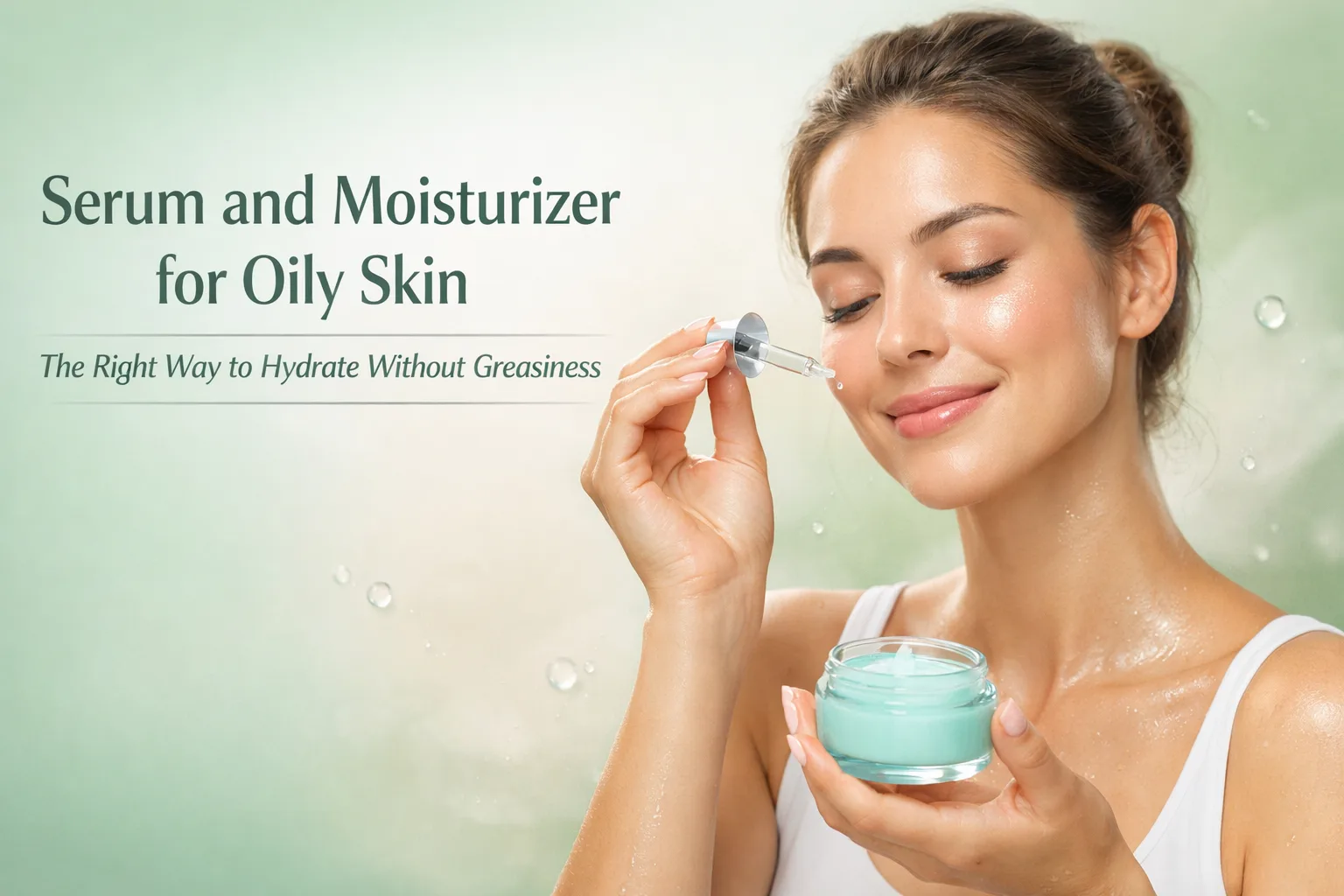
The best serum and moisturizer for oily skin combine lightweight hydration with oil-balancing ingredients. A water-based serum with actives like niacinamide or hyaluronic acid followed by a gel moisturizer helps control excess sebum, support the skin barrier, and maintain a healthy glow without clogging pores.
In this Article
- Understanding Serum and Moisturizer for Oily Skin
- Serum vs Moisturizer for Oily Skin
- How to Layer Serum and Moisturizer for Oily Skin
- Adjusting the Routine Based on Skin Concerns
- Recommended Ingredients for Serum and Moisturizer for Oily Skin
- Editor’s Picks: Serum and Moisturizer Combinations for Oily Skin
- Simple Budget-Friendly Routine
- FAQ: Serum and Moisturizer for Oily Skin
- Expert Takeaway
- Keep The Vibe Going
Understanding Serum and Moisturizer for Oily Skin
Many people with oily skin skip moisturizers, assuming hydration worsens greasiness. In reality, oily skin still needs hydration and barrier support. The key is choosing the right textures and ingredients.
What a Serum Does
A serum is a lightweight formula containing concentrated active ingredients designed to target specific skin concerns.
Key functions include:
- Delivering actives deeply into the skin
- Addressing pigmentation, fine lines, or enlarged pores
- Supporting hydration without heaviness
- Improving overall skin texture and glow
Serums typically contain small molecular ingredients such as:
- Hyaluronic acid – attracts moisture
- Niacinamide – regulates sebum and minimizes pores
- Vitamin C – brightens and reduces pigmentation
- Salicylic acid – helps control acne
Because serums absorb quickly, they work well for oily skin when used correctly.
What a Moisturizer Does
A moisturizer seals hydration into the skin and strengthens the protective barrier.
Its main roles include:
- Preventing transepidermal water loss (TEWL)
- Maintaining skin elasticity
- Supporting microbiome balance
- Protecting against environmental stressors
For oily skin, the goal is hydration without occlusion. Lightweight gel moisturizers perform best.
Serum vs Moisturizer for Oily Skin
| Feature | Serum | Moisturizer |
| Texture | Lightweight, fluid | Gel, lotion, or cream |
| Purpose | Targets specific concerns | Seals hydration and protects barrier |
| Active ingredients | High concentration | Moderate concentration |
| Application order | Applied first | Applied after serum |
| Best for oily skin | Oil-balancing actives | Gel or water-based hydration |
Both products work together rather than replacing each other.
How to Layer Serum and Moisturizer for Oily Skin
Proper layering ensures actives absorb well without causing congestion.
Step-by-Step Routine
- Cleanse thoroughly
Use a mild foaming cleanser to wash away excess oil, dirt, and impurities. - Apply serum on slightly damp skin
Apply 2–3 drops and gently press it into the skin. - Allow absorption
Wait about 30–60 seconds for the serum to penetrate. - Apply gel moisturizer
Use a thin layer to lock hydration without heaviness. - Finish with sunscreen (morning routine)
Choose a non-comedogenic SPF.
Correct layering improves hydration, minimizes shine, and strengthens the skin barrier.
Adjusting the Routine Based on Skin Concerns
Even within oily skin types, needs vary. Adjust actives and textures accordingly.
Oily Skin Tips
Oily skin often produces excess sebum due to dehydration or hormonal triggers.
Recommended approach:
- Choose water-based serums
- Use niacinamide or salicylic acid
- Prefer gel or oil-free moisturizers
- Avoid heavy occlusives like mineral oil
Expert Tip: A dehydrated oily skin type often produces more oil to compensate for water loss.
Dry Skin Tips
Some people experience combination skin, where certain areas feel oily while others feel dry.
Suggested routine:
- Hydrating serum with hyaluronic acid
- Lightweight cream moisturizer
- Layer slightly more moisturizer on dry areas
Balancing hydration helps normalize oil production.
Sensitive Skin Tips
Sensitive skin reacts easily to strong actives.
Best strategy:
- Choose fragrance-free formulas
- Introduce actives slowly
- Use calming ingredients like centella asiatica or panthenol
Patch testing prevents irritation.
Acne-Prone Skin Tips
Oily skin frequently overlaps with acne concerns.
Effective ingredients include:
- Salicylic acid
- Niacinamide
- Zinc PCA
Avoid thick creams and comedogenic oils.
Recommended Ingredients for Serum and Moisturizer for Oily Skin
Choosing the right ingredients matters more than brand names.
Best Serum Ingredients
| Ingredient | Benefit for Oily Skin |
| Niacinamide | Controls oil production |
| Hyaluronic acid | Hydrates without heaviness |
| Salicylic acid | Clears clogged pores |
| Vitamin C | Brightens and reduces pigmentation |
| Peptides | Supports skin barrier and elasticity |
Best Moisturizer Ingredients
Look for lightweight hydrators:
- Glycerin
- Aloe vera
- Squalane
- Ceramides (in light formulations)
Avoid overly rich oils that can clog pores.
Editor’s Picks: Serum and Moisturizer Combinations for Oily Skin
Below are effective pairings often recommended by dermatologists and skincare experts.
1. Hydration + Oil Control Routine
Serum:
- Niacinamide-based serum
Moisturizer:
- Oil-free gel moisturizer
Best for:
- Excess shine
- Enlarged pores
2. Brightening Routine
Serum:
- Vitamin C serum
Moisturizer:
- Lightweight antioxidant moisturizer
Best for:
- Dullness
- Pigmentation
3. Acne-Focused Routine
Serum:
- Salicylic acid serum
Moisturizer:
- Non-comedogenic gel moisturizer
Best for:
- Breakouts
- Clogged pores
Simple Budget-Friendly Routine
Effective skincare does not require expensive products.
A minimal oily skin routine includes:
Morning:
- Gentle cleanser
- Hydrating serum
- Gel moisturizer
- Sunscreen
Night:
- Cleanser
- Targeted serum (niacinamide or salicylic acid)
- Lightweight moisturizer
Consistency matters more than product quantity.
FAQ: Serum and Moisturizer for Oily Skin
A: Yes. Serum treats specific concerns, while moisturizer protects the skin barrier. Skipping moisturizer may actually increase oil production.
A: No. Moisturizers focus on hydration and barrier support. Serums contain higher concentrations of active ingredients that target issues like pigmentation or acne.
A: Using serum alone may leave the skin exposed to moisture loss. Moisturizer helps seal the actives and maintain hydration balance.
A: Apply serum first, followed by moisturizer. The thinner product always goes before thicker textures.
A: Skipping moisturizer often worsens oil production. Instead, switch to a lightweight gel-based moisturizer.
A: Avoid heavy occlusive ingredients such as:
Thick mineral oils
Petrolatum-heavy creams
Coconut oil (for acne-prone skin)
Expert Takeaway
Oily skin thrives on balanced hydration rather than oil removal. A well-formulated serum paired with a lightweight moisturizer can reduce excess shine, support the skin barrier, and improve texture over time.
Focus on water-based serums, oil-free moisturizers, and proven actives like niacinamide and hyaluronic acid. With consistent use, this combination helps maintain clear, healthy, and radiant skin.
Want the latest scoop, exclusive deals, and skincare secrets? Follow us on WhatsApp and never miss a glow-up moment!