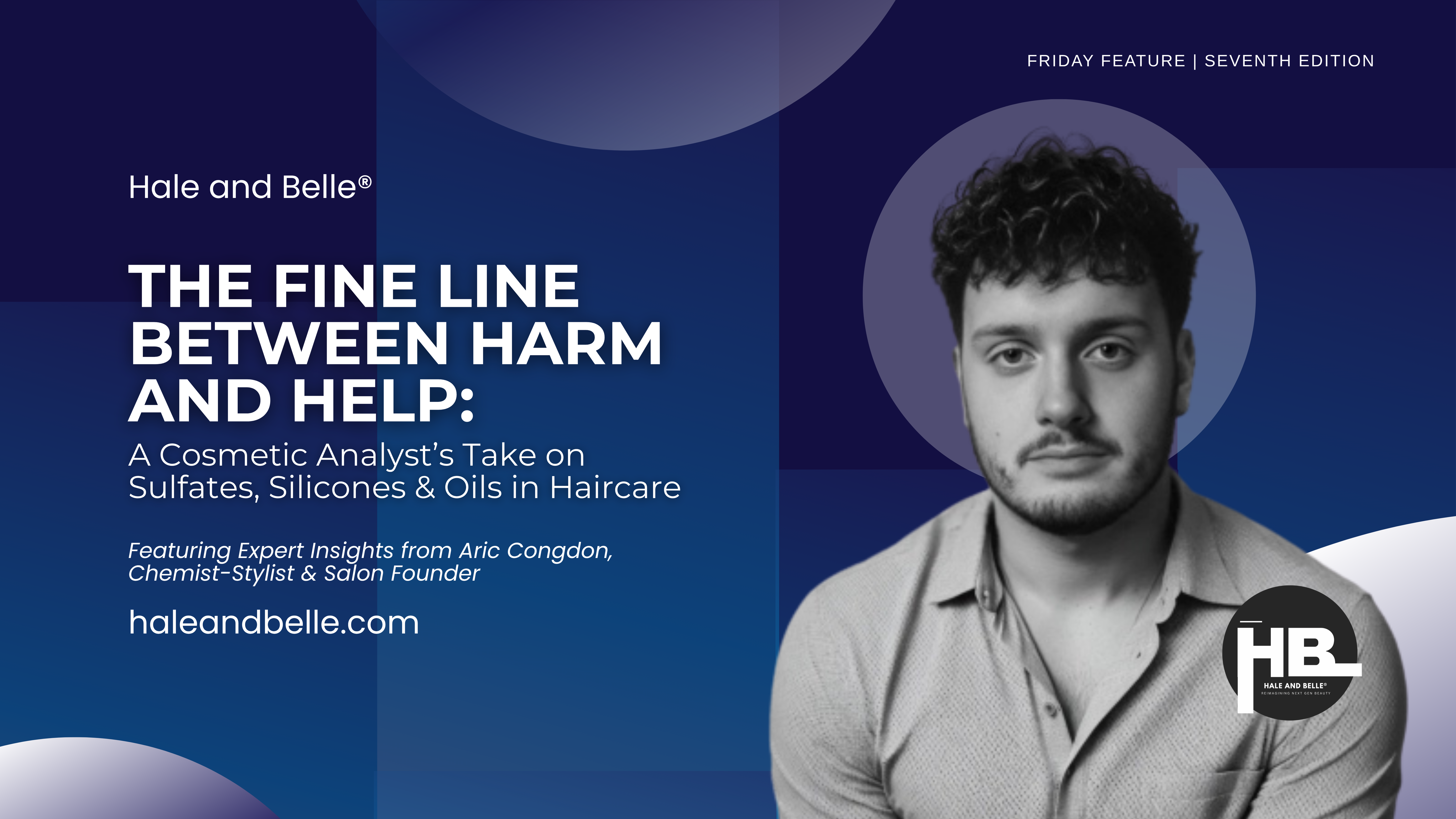
As consumers increasingly scrutinize ingredient lists, conversations around haircare ingredients have grown more polarizing. The beauty industry often pushes extremes—labeling common compounds as either miracle workers or absolute toxins. But what if the truth isn’t so binary? What if “clean” isn’t always better, and “toxic” isn’t always harmful? As ingredient debates continue to dominate social feeds and product packaging, we turn to someone who can cut through the noise with chemistry-backed clarity. Enter Aric Congdon, a salon owner and cosmetic analyst with a background in chemistry, who brings science and salon wisdom together. In this Hale and Belle Friday Feature, Aric takes a critical look at some of the most debated haircare ingredients—sulfates, parabens, silicones, fragrances, and oils—and shows why context, concentration, and quality matter more than labels.
Meet the Expert: Aric Congdon
Chemist-Stylist | Founder, Hairicc | Celebrity Colorist
Aric Congdon is a bicoastal chemist-stylist and the founder of Hairicc, a salon brand that blends science with artistry. With training under industry legends like Frédéric Fekkai and Warren Tricomi in New York, Aric has become a go-to expert in color, curls, and ingredient science. His expertise spans balayage, pintura highlights, and color correction—fused with a deep understanding of haircare chemistry.
He has styled for NYFW, served as a brand ambassador for The Wet Brush, and worked on set for music videos. His celebrity clientele includes names like Post Malone, Ludacris, Miss J, and Lana Del Rey, with work featured in Vogue, Elle, and NBC.
Follow him on Instagram @hairicc or visit hairicc.com to explore more of his science-forward approach to hair.
Formulations Are Like Cheesecakes
“Cosmetic formulation is like baking a cheesecake,” Aric says. “Use the right amount of sugar, and you get perfect consistency. Add too much, and it caramelizes into something else entirely.”
His point? Balance is everything. The same ingredient can be either beneficial or disruptive depending on the formula, concentration, and context of use. We must stop blaming individual ingredients and start focusing on how product formulations work.
Sulfates: Necessary Evil or Overblown Threat?
Sulfates like SLS (Sodium Lauryl Sulfate) and SLES (Sodium Laureth Sulfate) are cleansing agents designed to remove grime and oil from the scalp. Many people criticize sulfates for causing dryness and irritation, but Aric offers a more balanced perspective.
“Consistent use of harsh chemicals can cause contact dermatitis, especially in people with sensitive skin or skin issues like psoriasis. That said, sulfate molecules can be designed to be less harsh—you need to do your due diligence when using them.”
For individuals who don’t shampoo regularly or rely on heavy styling products, sulfates can be incredibly effective. The trick lies in knowing when and how to use them.
Scientific Insight:
- Sodium Lauryl Sulfate increases skin permeability, making it potentially irritating for sensitive users. (NCBI)
- However, there is no scientific evidence linking sulfates to cancer. (Healthline)
Hale and Belle Tip: Rotate in a sulfate-based clarifying shampoo if your hair sees lots of product buildup, but use milder surfactants—like Sodium Cocoyl Isethionate—for frequent washes.
Parabens: More Than Just Preservatives
Parabens help preserve shelf life by preventing bacterial growth, but they’ve become controversial due to their potential role as endocrine disruptors.
“Parabens not only can cause contact dermatitis, but they are also an endocrine disruptor, which is something to note—especially since females are the leading gender demographic in beauty product consumption,” Aric warns.
This is more than just a label concern. Parabens mimic estrogen in the body, which raises questions about cumulative hormonal effects over time.
Scientific Insight:
- Researchers have found traces of parabens in breast tissue samples, sparking ongoing debate about the effects of long-term exposure. (MDPI)
- Regular use may also increase the risk of allergic contact dermatitis.
Hale and Belle Tip: Choose paraben-free when possible, especially if you’re managing hormonal imbalances or skin sensitivities.
Fragrance: The Hidden Chemical Loophole
Many brands list ‘fragrance’ as a single ingredient, even though it can include hundreds of undisclosed chemicals.
“Fragrances can cause allergic reactions, scalp inflammation, and hormonal disruption due to common use of phthalates—among many other potential side effects,” Aric explains.
Brands can legally protect fragrance compositions under trade secret laws. As a result, consumers may unknowingly apply compounds linked to allergy, endocrine disruption, or worse.
Scientific Insight:
- Fragrance is among the top five allergens in cosmetic products. (PMC)
- Researchers link phthalates used in fragrance to hormonal imbalances and fertility problems. (Byrdie)
Hale and Belle Tip: Opt for products labeled fragrance-free or scented only with disclosed essential oils—especially if you have eczema or unexplained scalp sensitivity.
Oils: Treatment or Trend?
Hair oiling carries deep cultural significance and cosmetic benefits, but Aric emphasizes that not all oils suit the scalp.
“Most people use food-grade coconut oil, which actually has a fatty molecule that is too big to penetrate the hair and will sit on your scalp and clog pores. Also, people tend to forget that oil and water are immiscible—oil will push water away from your hair.”
He adds that unless you’re using fractured or high-grade cosmetic oils, you’re more likely to experience buildup than benefit.
Scientific Insight:
- Coconut oil helps reduce protein loss in the hair shaft—but its comedogenic nature makes it problematic for scalp application. (PubMed, Acne.org)
Hale and Belle Tip: Use oils sparingly and avoid the scalp unless you’re working with professionally formulated, lightweight oils like argan, baobab, or jojoba.
Silicones: The Texture Trade-Off
Silicones provide slip, shine, and frizz control, but they’ve earned a reputation for suffocating the hair shaft. According to Aric, this view misses key details.
“The same silicone can be good or bad based on quality. They are rated on a measurement called a centistoke. The lower the cSt, the more it acts like water and is high grade. The higher it is, the more it acts like sticky plastic and causes buildup.”
Centistoke (cSt) ratings indicate how thick or sticky a silicone is. High cSt silicones can coat the hair too heavily, while low cSt options offer benefits without the residue.
Scientific Insight:
- Cyclomethicone and other low-viscosity silicones evaporate quickly and don’t create buildup. (Cosmetics & Toiletries)
Hale and Belle Tip: Don’t fear all silicones—just choose wisely. Prioritize lightweight versions and use a clarifying shampoo every few weeks to reset.
What This Means for You
Aric’s key message is this: don’t fall for fear—follow the formula. Instead of banning ingredients outright, pay attention to the bigger picture. Ask:
- Check if the product matches your specific hair type and addresses your scalp’s unique needs.
- How often am I using it?
- Are these ingredients high-grade or cosmetic-quality?
- Look at how the ingredient interacts with others in the formula.
When you shift from fear-based to informed decisions, you empower yourself to build a routine that actually works.
Label-Decoding Guide
| Ingredient | What It Does | Smarter Swap |
|---|---|---|
| Sodium Lauryl Sulfate | Strong surfactant | Sodium Cocoyl Isethionate |
| Parabens | Preservative | Phenoxyethanol |
| Synthetic Fragrance | Potential allergen | Fragrance-free or essential oils |
| Dimethicone (high cSt) | Occlusive, heavy | Cyclomethicone, amodimethicone |
| Food-grade Coconut Oil | Comedogenic | Cosmetic-grade argan, jojoba oil |
5-Point Haircare Ingredient Checklist
- Read the first five ingredients—these dominate the formula.
- Choose gentle surfactants for daily washing.
- Go fragrance-free if prone to inflammation or allergies.
- Use lightweight oils on the ends—not on the scalp.
- Alternate between moisturizing and clarifying shampoos to prevent buildup.
Printable Ingredient Cheat Sheet
| Avoid | Why | Try Instead |
|---|---|---|
| SLS/SLES | Harsh, irritating | Sodium Lauroyl Methyl Isethionate |
| Parabens | Hormone disruptor | Ethylhexylglycerin |
| Synthetic Fragrance | Undisclosed allergens | Transparent EO blends |
| High-cSt Silicones | Sticky residue | Water-soluble silicones |
| Raw Coconut Oil | Pore-clogging | Jojoba, argan oil |
Visual Guide:

Takeaway
At Hale and Belle, we believe in science-led choices—not fear-based marketing. Thanks to Aric Congdon’s expert perspective, we’re reminded that haircare ingredients aren’t inherently good or bad—what truly matters is how they’re formulated.
So, the next time you pick up a bottle, don’t just ask what it’s free from—ask what it’s offering, how it’s formulated, and whether it’s genuinely right for your hair.
FAQs
Understanding Common Haircare Ingredients
Sulfates cleanse effectively, but harsh types may irritate sensitive scalps. If you notice dryness or flaking, switch to milder alternatives.
Silicones add shine and reduce frizz. Lightweight types benefit hair, while heavier ones may cause buildup. Use water-soluble options and clarify regularly.
Food-grade coconut oil often clogs pores and repels water due to its large fatty molecules. Unless it’s fractionated or cosmetic-grade, it may lead to scalp buildup rather than nourishment.
Parabens serve as preservatives that prevent mold and bacteria. However, studies suggest they may mimic estrogen and disrupt hormones. While more research is needed, many prefer paraben-free products as a precaution—especially those with hormonal sensitivities.
Harsh sulfates like SLS and SLES are strong detergents that can be drying. Milder options—like sodium cocoyl glutamate or sodium lauroyl methyl isethionate—cleanse gently without stripping. Always check labels for the sulfate type and its position in the ingredient list.
Scalp Sensitivities & Safer Haircare Choices
Fragrance formulations may contain hidden allergens and hormone-disrupting phthalates, as companies aren’t required to disclose full ingredient lists. This can lead to scalp inflammation and allergic reactions in sensitive individuals.
Individuals with sensitive scalps should limit exposure to harsh sulfates, synthetic fragrances (often with phthalates), and parabens. These can trigger contact dermatitis, itchiness, or inflammation. Always patch-test new products before full use.
Prolonged use of high-strength sulfates may cause dryness, particularly in curly, colored, or chemically treated hair. They’re not inherently damaging, but overuse without hydration or protection can impact hair health.
Focus on the formulation, not just the label. Look for transparent brands, avoid known irritants if you have sensitivities, and choose products based on your scalp and hair needs rather than trends.
Want the latest scoop, exclusive deals, and skincare secrets? Follow us on WhatsApp and never miss a glow-up moment!