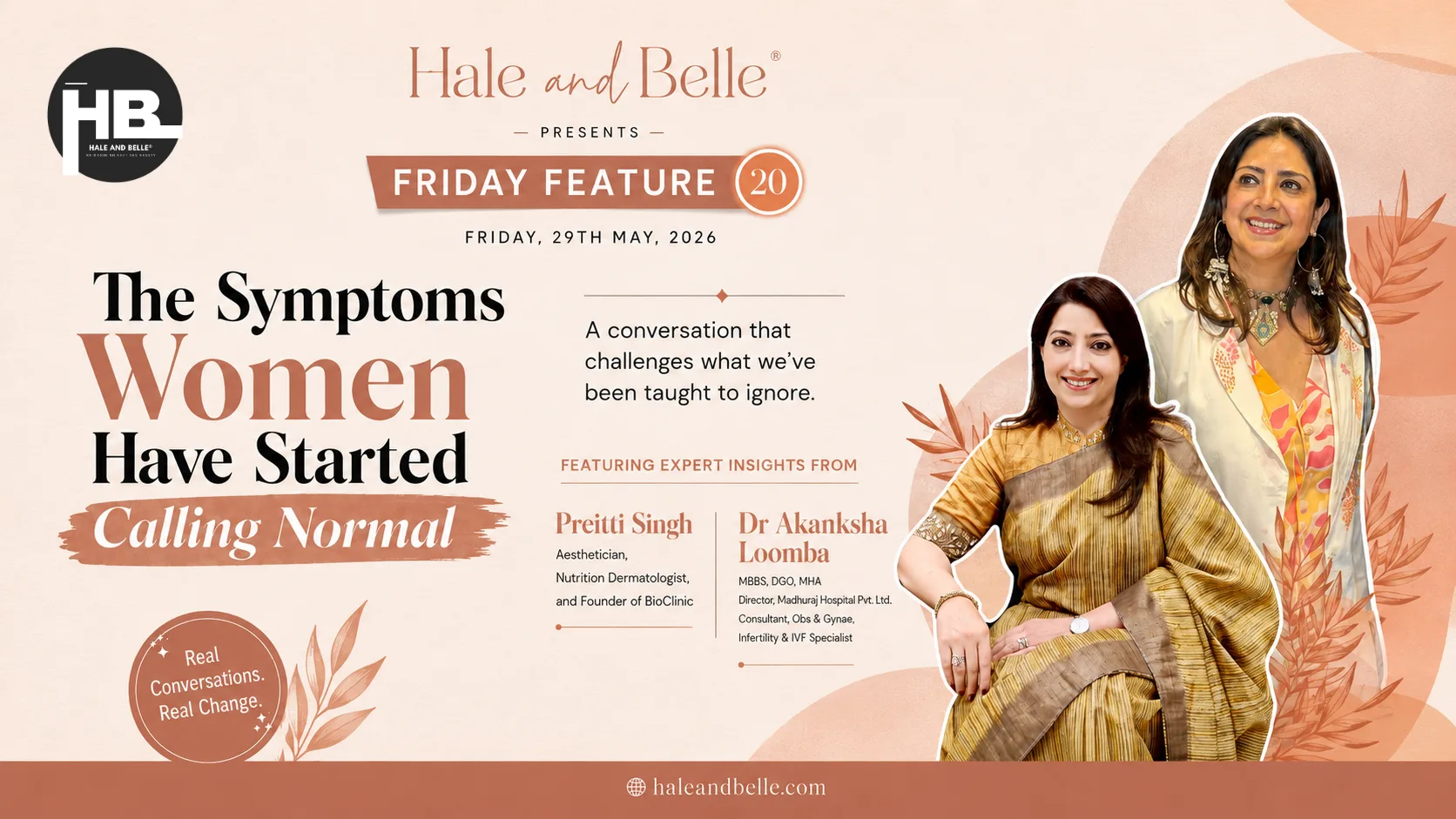
Friday Feature — Twentieth Edition Featuring Preitti Singh — Aesthetician, Nutri-Dermatologist & Founder, BioClinic, Kanpur | and Dr. Akanksha Loomba — MBBS, DGO (Gold Medalist), MHA | Gynaecologist, IVF Specialist & Director, Madhuraj Hospital, Kanpur
“Your body is always talking. The question is — have we been conditioned not to listen?”
There is a quiet epidemic happening in women’s health, and it has nothing to do with a new virus or a rare condition. It is something far more insidious: the widespread normalization of symptoms that deserve urgent attention. Fatigue that never lifts. Periods so painful they derail entire days. Skin that looks perpetually dull, inflamed, or broken out. Hair falling in clumps. Bloating that becomes a constant companion. Sleep that never feels restful.
For generations, women have been told — implicitly and explicitly — that discomfort is simply part of being a woman. And today, even as wellness culture booms and self-care fills our social feeds, many women are still absorbing these symptoms as background noise, too busy, too overwhelmed, or too conditioned to ask: what if this isn’t normal?
This edition of Friday Feature takes a close, expert-backed look at the symptoms women normalize — and what those symptoms might actually be telling us.
Why We Normalize: The Cultural Conditioning at the Root of It All
The tendency to dismiss health symptoms is not a personal failing. It is deeply cultural. Across South Asian households, in Western boardrooms, and in the relentless pace of modern life, women have long been rewarded for pushing through discomfort, not for stopping to investigate it.
Dr. Akanksha Loomba, gynaecologist and IVF specialist, explains it plainly: “For generations, many women were conditioned to believe that discomfort is simply a part of being a woman. Symptoms like fatigue, painful periods, mood fluctuations, bloating, or disturbed sleep were often dismissed as routine hormonal changes rather than potential indicators of underlying conditions such as Endometriosis, PCOS, thyroid imbalance, anaemia, or chronic stress.”
The stakes of this normalization are real. When a woman chalks up her debilitating period cramps to “just how periods are,” a diagnosis of endometriosis can be delayed by years — sometimes a decade. When chronic fatigue is attributed to a busy lifestyle rather than explored as a symptom, conditions like thyroid disorders or iron deficiency anaemia can go untreated. The gap between symptom onset and diagnosis for many hormonal conditions remains disturbingly wide, precisely because so many of these signs are considered ordinary.
Dr. Loomba adds: “Another important reason is that women today are constantly balancing multiple responsibilities — careers, caregiving, family, and emotional labour — so they tend to adapt to discomfort instead of pausing to investigate it. The problem is that when symptoms are normalized for too long, diagnosis and treatment can get delayed.”
What the Skin Is Trying to Tell You
Breakouts get spot treatments. Highlighters fake a glow. And when dullness sets in, we book a facial — rarely stopping to ask why any of it is happening in the first place. But rarely do we pause to ask: why is this happening in the first place?
Preitti Singh, Aesthetician, Nutri-Dermatologist, and Founder of BioClinic, Kanpur, has spent years reading skin at a diagnostic level — and what she sees is a canvas full of clues that most women have learned to cover rather than decode.
“The first cue and prompt on our appearance, where the body is ‘hinting’ to you, is always dullness on skin — the skin simply loses its natural glow,” she explains. “In our modern world, this is easily compensated by many glow-inducing makeup products like BB creams and highlighters, giving us the opportunity to normalise everything we see and feel in our reflection.”
But masking is not the same as healing. When Singh scans clients’ skin using advanced diagnostic technology at BioClinic, the results are consistent — and sobering: “In recent times, I have actually not witnessed a skin without inflammation. With the privilege of a skin scan, we read the report to the client where 90% of cases show inflammation, 60% reveal stress, and another 35% detect an accelerated speed of ageing.”
She is emphatic: “Inflammation is the precursor of any marker we read in a skin scan report.”
This is not aesthetic hyperbole. Chronic skin inflammation is now well understood as a reflection of systemic imbalance — from elevated cortisol to insulin resistance to gut dysbiosis. Hormonal skin changes are deeply interconnected with internal health, yet the beauty industry has largely trained us to respond to these signals with more product, not more inquiry.
The Hormonal Imbalance You Can See Before You Can Test
Here is one of the most clinically significant insights in this conversation: the body often signals hormonal disruption externally before laboratory reports become significantly abnormal.
Dr. Akanksha Loomba speaks directly to this: “Very often, in gynaecology, visible external changes are frequently the earliest clues of an internal hormonal imbalance. Persistent acne, sudden hair fall, facial pigmentation, unexplained weight gain, irregular cycles, increased facial hair, or inflammatory skin changes may reflect issues related to insulin resistance, PCOS, thyroid disorders, elevated stress hormones, perimenopause, or nutritional deficiencies.”
This means that a woman who visits a dermatologist for adult acne may actually need a gynaecological evaluation. A woman experiencing sudden hair thinning may need thyroid and iron panels before a haircare regimen. The skin, hair, and body composition changes that we normalize — and then spend money “fixing” cosmetically — may be the body’s earliest and most accessible diagnostic language.
Dr. Loomba reinforces this with her clinical approach: “That is why a holistic evaluation — including menstrual history, sleep, stress levels, lifestyle, nutrition, and metabolic health — is just as important as hormone testing itself.”
The Symptoms Women Normalize: A Closer Look
Let us name what far too many women are living with, without questioning:
Chronic fatigue:
Not tiredness after a late night. A persistent, bone-deep exhaustion that does not resolve with rest. Thyroid dysfunction, adrenal stress, anaemia, and sleep disorders tied to hormonal disruption are all worth ruling out.
Painful periods (Dysmenorrhoea)
Periods that require you to cancel plans, reach for painkillers, or stay in bed are not normal. Severe menstrual pain is one of the hallmark symptoms of endometriosis, fibroids, and PCOS — all conditions that benefit enormously from early diagnosis.
Bloating and digestive issues
Cyclical bloating, particularly around ovulation or menstruation, can reflect oestrogen fluctuations and progesterone imbalance. It is also linked to gut microbiome disruption, which in turn affects skin health and mood.
Sleep disturbances
Difficulty falling asleep, waking at 3am, or non-restorative sleep are not just “stress.” They can be early signs of perimenopause, cortisol dysregulation, or thyroid imbalance.
Mood fluctuations and anxiety
PMS-related mood shifts that significantly impair functioning may indicate PMDD. PMDD is a diagnosable and treatable condition — yet it remains one of the most widely under-recognised in women’s health.
Dull, inflamed, or persistently breaking-out skin
As Preitti Singh observes at BioClinic, inflammation shows up in nearly every scan. Chronic skin dullness, adult acne, and sensitivity are the face of internal imbalance — and they deserve clinical attention, not just concealer.
Hair thinning and fall
Diffuse hair loss across the scalp, particularly at the temples or part line, is a common signal of thyroid imbalance, iron deficiency, and androgenic hormonal activity. Women with PCOS will recognise this pattern as one of its most visible and distressing early markers.
Unexplained weight changes:
Weight gain concentrated around the abdomen, or sudden loss, can reflect cortisol imbalance, insulin resistance, or thyroid shifts. Stress, skin, and the body’s internal ecosystem are all deeply connected — and the visible body often shows us what the bloodwork has not yet caught.
The Role of Social Media: Awareness and Misinformation in the Same Feed
We cannot talk about how women understand their health today without talking about social media. Wellness content now reaches billions of feeds — and it is doing both enormous good and considerable harm simultaneously.
Dr. Loomba offers a nuanced read: “Social media has created both awareness and confusion. On the positive side, more women are openly discussing periods, fertility, menopause, mental health, and conditions like Polycystic Ovary Syndrome or Endometriosis, which has reduced stigma and encouraged women to seek medical help earlier.”
The openness is real. For many women, a TikTok video about adenomyosis or a Reddit thread about PMDD was the first time they heard language for what they had been experiencing for years. Platforms have genuinely democratised health literacy in this regard.
But the same platforms that raise awareness can also mislead. “Wellness trends online can sometimes oversimplify complex hormonal issues,” Dr. Loomba cautions. “Many women are exposed to unverified advice, self-diagnosis, unnecessary supplements, or ‘quick-fix hormone balancing’ trends that may not be scientifically accurate. Hormonal health is deeply individualised, and what works for one person may not work for another.”
Her guidance is clear: “The ideal approach is to use social media as a starting point for awareness, but rely on qualified medical guidance for diagnosis and treatment decisions.”
From Awareness to Action: The Ecosystem Shift
On the aesthetic side, Preitti Singh sees an encouraging shift in awareness too: “There is a growing percentage of self-awareness, and a rise towards the mindset of an ecosystem of Emotions — Food — Daily Applications — Professional Visits that reinforce daily application at home to reach deeper layers of skin. This growing trend is setting examples for many combating skin ageing hazards and actually defying their age. This connection of intrinsic care is on a rising trend.”
The woman who used to just book a facial is now asking what is causing her inflammation — and increasingly, women navigating perimenopause are turning to advanced regenerative treatments like exosome therapy for menopausal skin ageing to address the root of what hormones are doing to their skin. That shift matters — even if it is still gathering momentum.
The Internal Ecosystem: Skin, Stress, Hormones, and the Connection We Keep Ignoring
One of the most significant evolutions in both dermatology and gynaecology is the acknowledgement that the body is not a collection of separate systems. Skin is not separate from hormones. Hormones are not separate from stress. Stress is not separate from gut health, sleep, and nutrition.
Preitti Singh’s model of skin care as an ecosystem — Emotions, Food, Daily Applications, Professional Visits — reflects what the science increasingly confirms: that surface-level interventions on an internally compromised body will only go so far. Understanding the connection between your skin barrier, lifestyle, and stress is not optional — it is foundational.
Similarly, Dr. Loomba’s call for holistic gynaecological evaluation recognises that a woman who presents with acne and hair fall may have PCOS driving both — and treating only the skin will leave the hormonal root untouched.
This is the paradigm shift that women’s health urgently needs: moving from symptom suppression to root-cause exploration. The red light therapy conversation is one example of how women are beginning to seek tools that work at a cellular level, not just on the surface. The AI-driven skin analysis movement, as Preitti Singh practises at BioClinic, is another — because reading what lies beneath the skin’s surface changes what treatment means entirely.
Meet the Experts
Preitti Singh
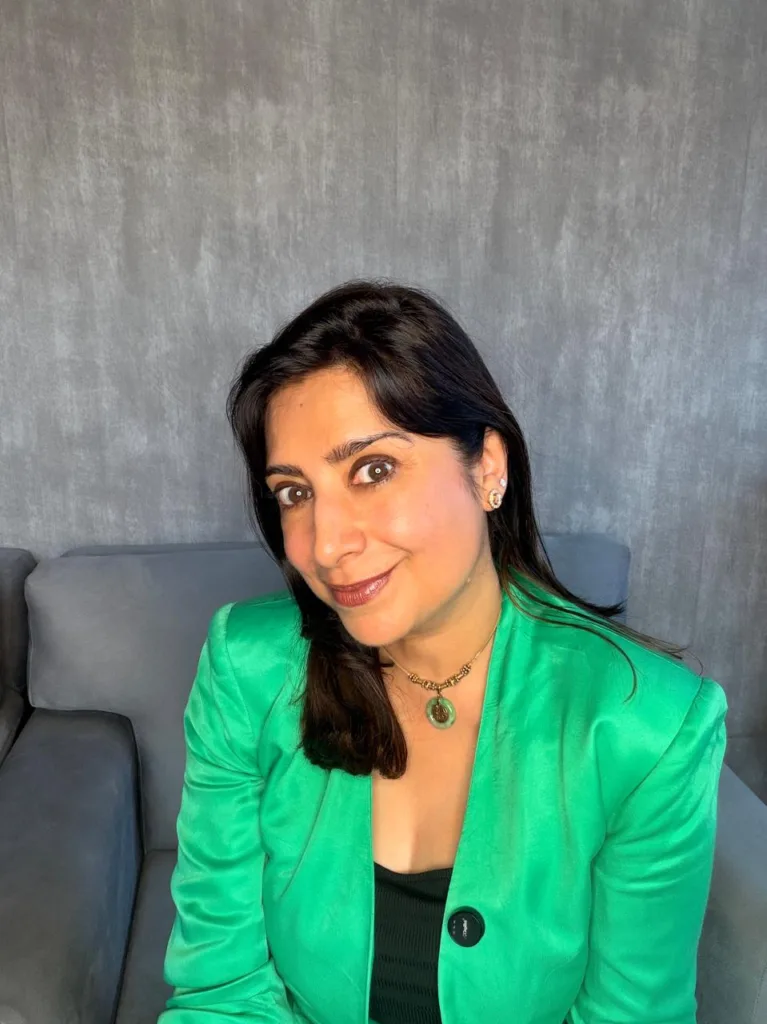
Preitti Singh is a distinguished Aesthetician and Nutri-Dermatologist based in Kanpur, and the visionary founder of BioClinic — a trusted destination for diagnostic, science-backed skin and wellness treatments. With a practice built on the principle that the skin is a mirror of internal health, Preitti brings together clinical aesthetics, nutrition science, and advanced skin scanning technology to address skin concerns at their root.
Her diagnostic approach sets BioClinic apart: using advanced skin scan technology, she analyses inflammation, stress markers, hydration levels, and biological ageing to map what is truly happening beneath the surface before any treatment is prescribed. She is a sought-after expert contributor to Hale and Belle on topics spanning skin inflammation, red light therapy, the skin-stress connection, and intelligent skincare practices.
Preitti is a firm advocate of the ecosystem approach to skin health — recognising that lasting radiance cannot be achieved without addressing emotions, nutrition, daily routines, and professional care in concert.
Dr. Akanksha Loomba
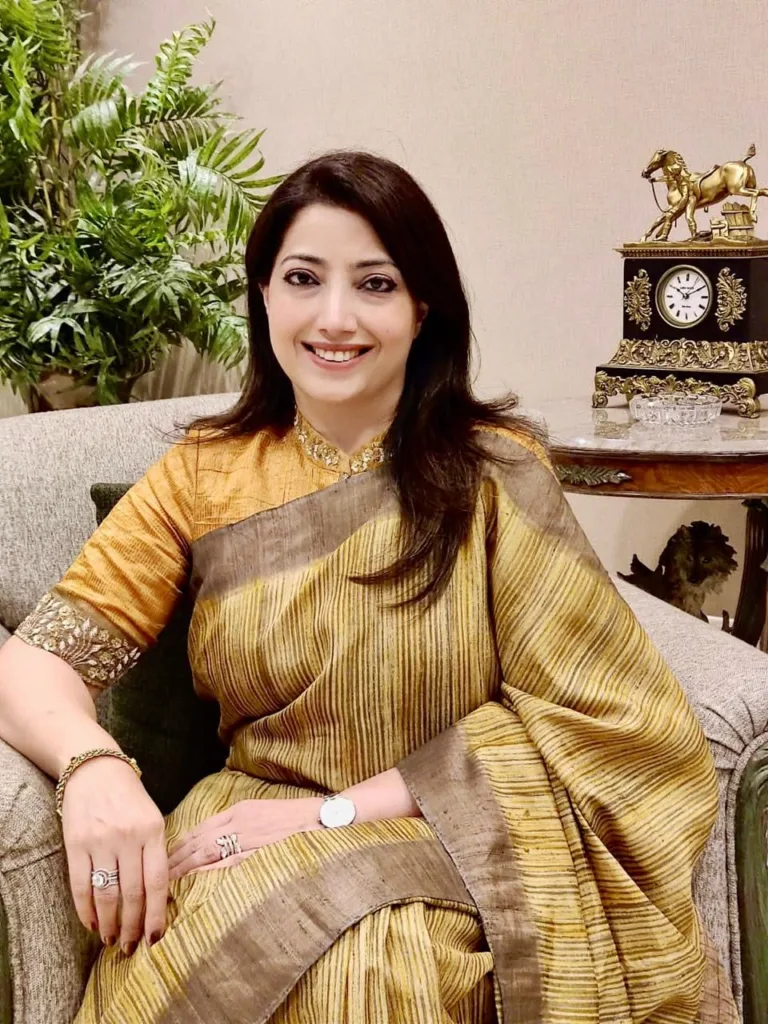
Dr. Akanksha Loomba is one of North India’s most decorated and accomplished gynaecologists and infertility specialists. A gold medallist in her DGO, she brings a rare combination of academic excellence, international clinical training, and deep patient-centred practice to her work.
Her international training portfolio includes IVF-ICSI specialisation at the Centre for Reproductive Medicine, Cleveland, USA (2012) and the University of Nebraska Medical Centre, USA/Mumbai (2013); Endoscopy (Diploma from Kiel, Germany, 2011); Ultrasound training at the IAN-DONALD School, USA (2003); and Colposcopy training at ISCCP (2009).
Dr. Loomba has served as Joint Treasurer, Co-Editor, and Executive Member of KOGS (Kanpur Obstetric and Gynaecological Society). Her honours include the Beauty with a Purpose award by JCI Kanpur Lavanya Club (2016), the prestigious U.P. Ratan Award (2019) for exemplary work in Infertility & IVF, the 4th FICCI Flow Women Award of U.P. (2018–2019), the Most Trusted Doctor in IVF by Amar Ujala (2023), and the Hindustan Shree-Samman Award (2023) for exemplary work in the field of medicine.
Frequently Asked Questions
What Your Body Is Showing You
A: Yes. According to Dr. Akanksha Loomba, the body often signals hormonal disruption externally before laboratory reports become significantly abnormal. Persistent acne, sudden hair fall, facial pigmentation, and inflammatory skin changes can be early external signs of conditions like PCOS, insulin resistance, or thyroid disorders.
A: Skin inflammation is the body’s immune response to stress — internal or external. Preitti Singh at BioClinic observes inflammation in nearly 90% of skin scans, driven by cortisol elevation, dietary triggers, hormonal fluctuations, and environmental aggressors. Chronic inflammation is the precursor to accelerated ageing, barrier breakdown, and sensitivity.
A: Chronic stress elevates cortisol, which disrupts collagen production, increases skin inflammation, and impairs the skin barrier. Hormonal fluctuations similarly affect sebum production, hydration, pigmentation, and skin renewal. Treating skin without addressing these internal drivers typically produces limited, short-lived results.
What Your Symptoms Are Telling You
A: Painful periods, chronic fatigue, bloating, disturbed sleep, mood swings, unexplained weight changes, adult acne, persistent skin dullness, facial hair growth, and hair thinning can all indicate underlying hormonal imbalances including PCOS, thyroid disorders, endometriosis, or perimenopause.
A: Some cramping is common, but pain severe enough to disrupt daily functioning or require regular painkiller use is not something to simply endure. This level of pain can signal endometriosis, fibroids, adenomyosis, or PCOS — all conditions that benefit greatly from early diagnosis.
A: Social media has increased awareness and reduced stigma around conditions like PCOS and endometriosis. However, it also spreads unverified advice and promotes quick-fix supplements. Dr. Loomba recommends using social media for initial awareness, then consulting a qualified medical professional for diagnosis and treatment.
A: If symptoms regularly disrupt your daily life — whether painful periods, persistent fatigue, unexplained weight shifts, mood changes, or skin and hair changes that don’t respond to standard care — seek a holistic medical evaluation. You do not have to wait until symptoms become severe to deserve investigation.
The Bottom Line: Stop Normalising, Start Listening
The symptoms women normalize are not a rite of passage. They are a language — the body’s persistent, often urgent, attempt to communicate that something needs attention.
The cultural conditioning that taught us to absorb discomfort as womanhood has real medical consequences. Delayed diagnoses. Untreated conditions. Years of unnecessary suffering. And beneath it all, a fundamental disconnect between women and their own bodies.
Preitti Singh’s work at BioClinic shows us that the skin is not just an aesthetic surface to manage — it is a diagnostic map, and the rising demand for exosome therapy for skin ageing in Kanpur is proof that women in this city are now seeking treatments that work at a cellular level, not just a cosmetic one. Dr. Akanksha Loomba’s clinical practice reminds us that a woman who presents with visible changes may be showing us the external face of an internal imbalance that deserves investigation, not concealment.
The shift is already beginning. Women are asking deeper questions. Seeking root causes. Demanding more from their healthcare providers — and from themselves. The ecosystem is changing.
But it changes faster when we stop calling the symptoms normal.
For more expert-backed conversations on women’s skin, wellness, and hormonal health, explore haleandbelle.com. For further reading on hormonal skin changes, visit the American Academy of Dermatology and the PCOS Awareness Association.
Want the latest scoop, exclusive deals, and skincare secrets? Follow us on WhatsApp and never miss a glow-up moment!