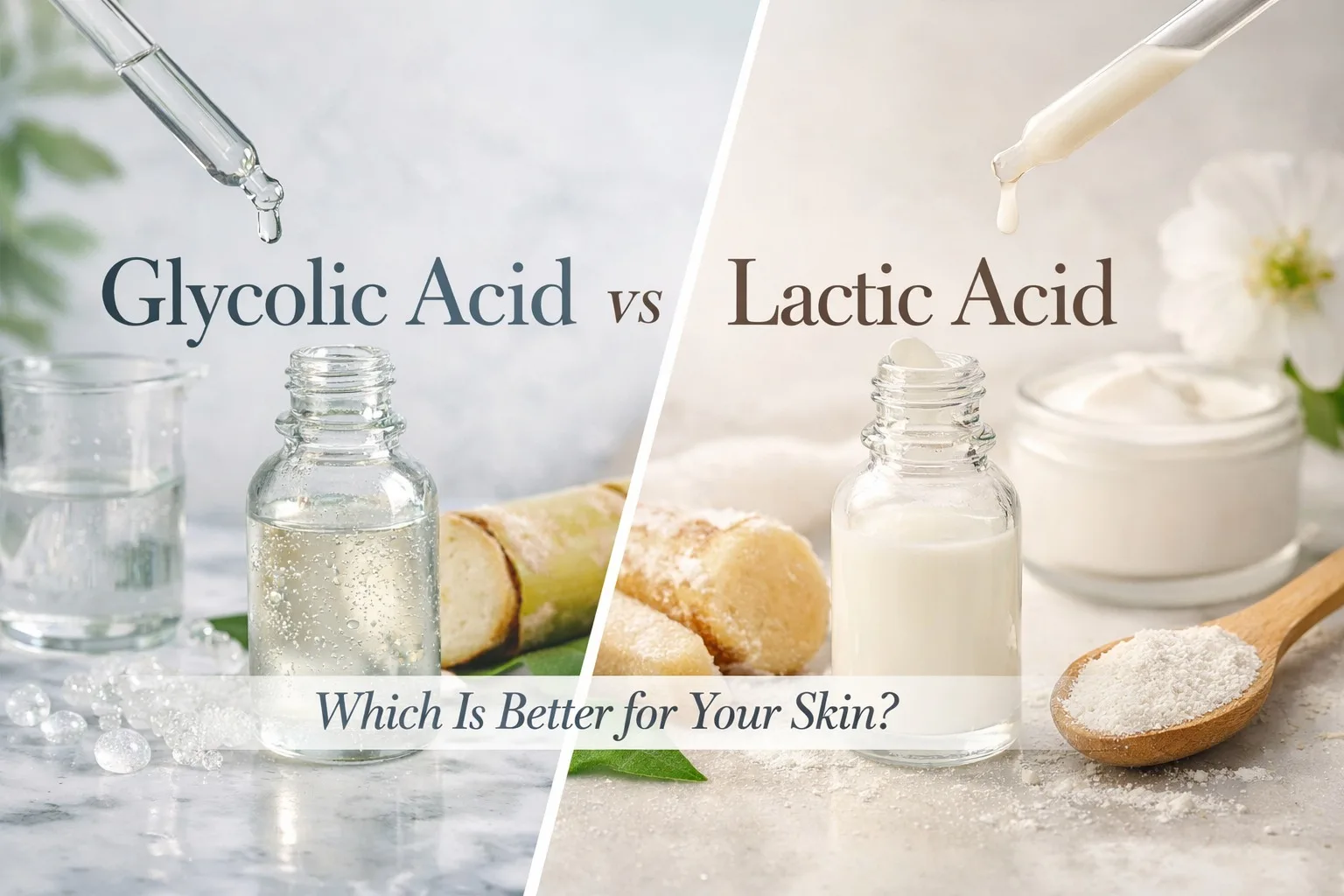
When comparing glycolic acid vs lactic acid, both are alpha hydroxy acids (AHAs) that exfoliate the skin by dissolving dead skin cells. Glycolic acid penetrates deeper and targets pigmentation and texture, while lactic acid works more gently and also hydrates the skin, making it suitable for sensitive or dry skin types.
Understanding Glycolic Acid vs Lactic Acid
What It Is
Glycolic acid and lactic acid belong to a group of skincare ingredients called alpha hydroxy acids (AHAs). These acids exfoliate the skin chemically rather than physically.
Instead of scrubbing the skin surface, AHAs dissolve the bonds that hold dead skin cells together. This process accelerates cell turnover, revealing fresher and smoother skin.
However, the two acids differ in molecular structure.
- Glycolic acid has the smallest molecular structure among all alpha hydroxy acids (AHAs).
- Lactic acid has a larger molecule derived from fermented sugars.
Because of this structural difference, their strength and penetration level vary.
Why It Matters for Skin Health
Regular exfoliation plays a major role in maintaining healthy skin. Dead skin cells naturally accumulate on the surface and can cause dullness, uneven tone, and clogged pores.
AHAs help by:
- smoothing rough skin texture
- brightening dull complexions
- improving the appearance of fine lines
- fading hyperpigmentation
- supporting collagen renewal
However, choosing the wrong exfoliating acid can disrupt the skin barrier. That is why understanding glycolic acid vs lactic acid helps you build a safer skincare routine.
If your skin feels irritated after exfoliation, switch to a skin barrier repair routine focused on hydration and calming ingredients.
Glycolic Acid vs Lactic Acid: Key Differences
| Feature | Glycolic Acid | Lactic Acid |
| Molecule size | Smallest among AHAs | Larger molecule |
| Penetration | Deeper | Surface-level |
| Strength | Stronger exfoliant | Gentler exfoliant |
| Best for | Pigmentation, texture, aging | Hydration, sensitive skin |
| Irritation risk | Higher | Lower |
| Hydration effect | Minimal | Naturally hydrating |
In simple terms, glycolic acid delivers intensive resurfacing, while lactic acid focuses on gentle exfoliation with hydration.
If you prefer minimal products, start with a simple skincare routine that focuses on cleansing, treatment, hydration, and sun protection.
Glycolic Acid vs Lactic Acid for Different Skin Concerns
Understanding how each acid works for specific concerns helps you choose the right ingredient.
For Hyperpigmentation
Glycolic acid often works better for stubborn pigmentation. Its small molecular size allows deeper penetration into the skin.
This deeper action accelerates cell renewal, helping fade dark spots and uneven tone more effectively.
For Dull Skin
Both acids improve dullness. However, lactic acid adds an extra benefit: hydration.
Because it functions as a mild humectant, it helps the skin retain moisture while exfoliating.
For Fine Lines and Early Aging
Glycolic acid is often preferred in anti-aging routines.
It stimulates faster cell turnover and may support collagen production, improving the appearance of fine lines over time.
Tip: If you incorporate retinol in anti-aging routines, alternate it with exfoliating acids on separate nights to reduce the risk of irritation.
For Rough Texture
If your skin feels bumpy or uneven, glycolic acid usually produces faster results.
However, sensitive skin types may prefer lactic acid to avoid irritation.
How to Use Glycolic Acid or Lactic Acid in a Skincare Routine
Step-by-Step Routine
To use AHAs safely, follow a simple structure:
- Cleanse your face
Use a mild cleanser to wash away dirt and excess oil. - Apply the exfoliating acid
Choose either glycolic acid or lactic acid. - Allow absorption
Wait about 30 seconds before applying other products. - Apply hydrating serums
Ingredients like hyaluronic acid help balance exfoliation. - Seal with moisturizer
Moisturizer strengthens the skin barrier. - Use sunscreen in the morning
AHAs increase sun sensitivity.
Consistency matters more than strength. Start slowly and increase usage gradually.
Tip: After exfoliation, apply a hydrating serum such as hyaluronic acid for hydration to replenish moisture and support skin comfort.
Adjust Based on Skin Concerns
Pigmentation
- glycolic acid toner or serum
- use two to three nights weekly
Hydration and gentle exfoliation
- lactic acid serum
- use two to four times weekly
Beginner routines
- start with low concentrations (around 5%)
Skin Type Guidance
Choosing between glycolic acid vs lactic acid often depends on your skin type.
Oily Skin
Oily skin usually tolerates stronger exfoliating acids.
Glycolic acid helps by:
- removing buildup
- smoothing skin texture
- reducing clogged pores
However, excessive exfoliation can trigger irritation. Limit use to two or three nights weekly.
Dry Skin
Dry skin benefits more from lactic acid because it exfoliates while maintaining hydration.
It helps improve dullness without stripping the skin barrier.
Sensitive Skin
Sensitive skin types typically respond better to lactic acid.
Its larger molecule penetrates more slowly, reducing irritation risk.
Start with lower concentrations and gradually increase frequency.
Acne-Prone Skin
Both acids can help with post-acne marks and texture.
- glycolic acid improves skin turnover and fades dark spots
- lactic acid smooths rough texture and gently exfoliates
However, salicylic acid often remains the primary ingredient for active acne.
Tip: If you struggle with breakouts, adding salicylic acid for acne treatment can help unclog pores and reduce congestion.
AHA Strength Guide: What Percentage Should You Use?
The strength of exfoliating acids matters as much as the ingredient itself.
Typical concentration ranges include:
5–8%
- beginner level
- suitable for sensitive skin
8–12%
- moderate exfoliation
- common in toners and serums
20–30%
- professional chemical peels
- usually performed in clinics
Starting with lower concentrations helps your skin adjust safely.
Both glycolic acid and lactic acid belong to the category of ingredients used in chemical exfoliation, which dissolves dead skin cells without physical scrubbing.
Beginner Mistakes When Using Exfoliating Acids
Many skincare problems occur due to overuse of active ingredients.
Common mistakes include:
- using exfoliating acids every night
- combining too many actives in one routine
- skipping sunscreen
- ignoring barrier repair products
Healthy skin requires a balance between exfoliation and hydration.
If irritation appears, reduce frequency and focus on soothing ingredients.
Recommended Product Formats
Instead of focusing on brands, consider ingredient formats.
Glycolic Acid Products
Look for:
- exfoliating toners (5–10%)
- resurfacing serums
- exfoliating pads
- overnight peel solutions
These formats deliver consistent exfoliation.
Lactic Acid Products
Gentler formats include:
- hydrating exfoliating serums
- resurfacing lotions
- overnight renewal creams
- mild exfoliating toners
Many formulas combine lactic acid with glycerin, ceramides, or hyaluronic acid for added hydration.
After applying your exfoliating acid, follow with a hydrating serum, ensuring you are layering hyaluronic acid correctly to maintain moisture balance.
What Dermatologists and Skin Experts Say
Dermatologists explain the difference between glycolic acid vs lactic acid primarily through molecular chemistry.
Glycolic acid contains the smallest molecular weight among AHAs, which allows deeper penetration into the epidermis. This stronger penetration improves skin renewal and can stimulate collagen activity.
In contrast, lactic acid functions as both an exfoliant and a natural moisturizing factor.
Human skin naturally produces lactic acid as part of its hydration system. As a result, it exfoliates gently while supporting moisture balance.
Dermatologist Advice
Skin experts generally recommend:
- glycolic acid for pigmentation and aging concerns
- lactic acid for dry or sensitive skin
- gradual introduction of exfoliating acids
They also emphasize supporting the skin barrier with ingredients like:
- ceramides
- niacinamide
- panthenol
- hyaluronic acid
Dermatologists often recommend pairing exfoliating acids with soothing ingredients like niacinamide for barrier repair.
Myth vs Fact
Myth: Stronger exfoliation always produces better skin.
Fact: Over-exfoliation weakens the skin barrier and increases inflammation. Moderate, consistent exfoliation delivers safer long-term results.
Frequently Asked Questions
Yes. Glycolic acid has a smaller molecular structure, which allows deeper penetration and stronger exfoliation.
Glycolic acid typically works better for pigmentation because it accelerates deeper skin renewal.
Yes. Lactic acid penetrates more slowly and hydrates the skin, making it gentler for sensitive skin types.
Yes, but most dermatologists recommend alternating them rather than using both in the same routine.
Most people benefit from exfoliating two or three times weekly.
Expert Takeaway
The debate around glycolic acid vs lactic acid ultimately depends on your skin goals.
Choose glycolic acid if you want to address:
- hyperpigmentation
- rough texture
- fine lines
Choose lactic acid if your goal is:
- gentle exfoliation
- hydration
- sensitive skin care
However, the most effective skincare routines combine balanced exfoliation, hydration, and daily sunscreen. Healthy skin improves gradually through consistent care rather than aggressive treatments.
Want the latest scoop, exclusive deals, and skincare secrets? Follow us on WhatsApp and never miss a glow-up moment!