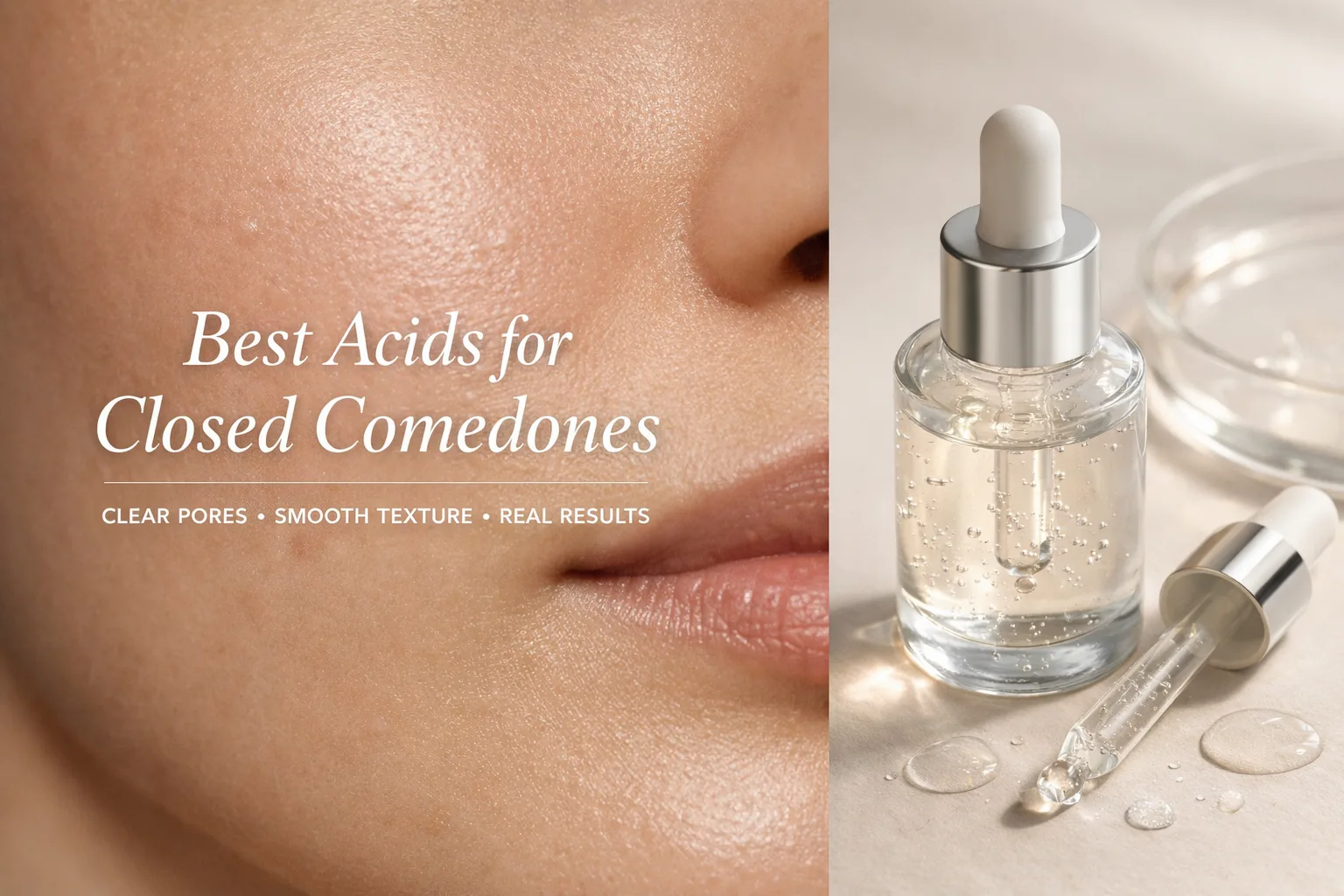
Closed comedones respond best to exfoliating acids that dissolve buildup inside pores. The most effective closed comedones acids include salicylic acid, lactic acid, and mandelic acid. These ingredients unclog pores, smooth texture, and prevent recurrence when used consistently and correctly.
What Are Closed Comedones and Why Acids Matter
What it is
Closed comedones are small, flesh-colored bumps under the skin. They form when dead skin cells, oil, and debris get trapped inside pores without exposure to air. Unlike blackheads, they remain closed and often feel like rough texture rather than visible acne.
Why it matters for skin health
Although harmless, closed comedones disrupt skin texture and dull the skin tone. Over time, they can evolve into inflammatory acne if bacteria build up. Research on acne pathogenesis shows that clogged pores, excess sebum, and microbial activity are key contributors, while understanding the causes of clogged pores and acne helps prevent this progression. Therefore, early intervention with targeted actives is essential.
Comparison Table: Closed Comedones vs Other Acne Types
| Type | Appearance | Cause | Best Treatment Approach |
|---|---|---|---|
| Closed Comedones | Skin-colored bumps | Trapped oil + dead skin | Chemical exfoliation (acids) |
| Blackheads | Dark open pores | Oxidized sebum | Salicylic acid, clay masks |
| Whiteheads | White pus-filled bump | Bacteria + clogged pore | Benzoyl peroxide, retinoids |
| Cystic Acne | Deep painful lumps | Hormonal, bacterial | Dermatologist treatment |
Best Closed Comedones Acids You Should Use
1. Salicylic Acid (BHA)
Salicylic acid is oil-soluble, which allows it to penetrate deep into pores and dissolve sebum buildup. According to the American Academy of Dermatology, it is one of the most effective ingredients for unclogging pores and preventing acne formation.
Why it works:
- Unclogs pores at the root
- Reduces excess oil
- Prevents new comedones
Best for: oily and acne-prone skin
2. Lactic Acid (AHA)
Lactic acid is a gentle exfoliant derived from milk. It works on the skin’s surface.
Why it works:
- Removes dead skin buildup
- Improves texture and glow
- Supports hydration
Best for: dry or dull skin
3. Mandelic Acid (AHA)
Mandelic acid has larger molecules. As a result, it penetrates slowly and reduces irritation.
Why it works:
- Gently exfoliates
- Suitable for sensitive skin
- Helps with pigmentation
Best for: sensitive and combination skin
4. Glycolic Acid (AHA)
Glycolic acid is a potent exfoliant that accelerates cell turnover and improves skin texture. Clinical evidence shows that glycolic acid peels can significantly improve comedonal acne and restore smoother skin, as demonstrated in clinical studies on glycolic acid for acne treatment.
Why it works:
- Smooths uneven texture
- Boosts radiance
- Enhances absorption of other actives
Best for: experienced users
What Happens If You Avoid Acids?
If you avoid using exfoliating acids entirely:
- Dead skin accumulates faster
- Pores remain clogged
- Texture worsens over time
- Skincare absorption reduces
- Breakouts become more frequent
In short, your routine lacks a key step for maintaining clear pores.
How to Use Acids for Closed Comedones
Step-by-Step Routine
- Cleanse with a gentle, non-stripping face wash
- Apply acid treatment (2–3 times per week initially)
- Wait 1–2 minutes before layering
- Follow with hydrating serum (hyaluronic acid works well)
- Seal with moisturizer to protect the skin barrier
- Apply sunscreen in the morning without fail. Daily sun protection is essential when using exfoliating acids, as they increase photosensitivity. The Skin Cancer Foundation strongly recommends broad-spectrum SPF to prevent damage and irritation
Adjustments Based on Skin Concerns
- If you experience dryness: reduce frequency
- If irritation occurs: switch to mandelic acid
- If persistent bumps remain: alternate BHA and AHA
Consistency matters more than intensity.
Skin Type Guidance
Oily Skin
Use salicylic acid regularly. It controls oil while clearing pores.
Dry Skin
Opt for lactic acid. It exfoliates while maintaining hydration.
Sensitive Skin
Choose mandelic acid. Start once weekly to build tolerance.
Acne-Prone Skin
Combine salicylic acid with barrier-repair ingredients like ceramides.
Recommended Products or Ingredient Types
Instead of focusing only on brands, prioritize formulations. For more targeted acne treatment, ingredients like benzoyl peroxide work by reducing acne-causing bacteria—explore how it works in detail in benzoyl peroxide for acne.
- BHA toners (1–2% salicylic acid)
- AHA serums (lactic or mandelic acid-based)
- Exfoliating masks (weekly use)
- Combination exfoliants (AHA + BHA blends)
Look for formulations that include soothing agents like panthenol or allantoin. This reduces irritation while maintaining efficacy.
Simple or Budget Alternatives
If you want effective results without high spend:
- Use pharmacy-grade salicylic acid solutions
- Try minimalist formulations with single actives
- Avoid over-layering expensive actives
Remember, formulation matters more than price.
What Dermatologists and Skin Experts Say
Dermatologists explain that closed comedones form due to abnormal keratinization, where dead skin cells fail to shed properly. Acids correct this process by promoting controlled exfoliation and improving cell turnover.
Key insights:
- BHAs dissolve lipid-based debris inside pores
- AHAs weaken bonds between dead skin cells
- Regular exfoliation normalizes skin renewal
Dermatologist-style advice:
- Start low and slow
- Avoid mixing too many actives at once
- Always protect the skin barrier
Myth vs Fact
- Myth: Scrubs remove closed comedones better
- Fact: Chemical exfoliants work deeper and more effectively
This reinforces why acids outperform physical exfoliation.
Frequently Asked Questions
They may reduce slowly, but without exfoliation, buildup often persists.
Salicylic acid typically shows quicker results due to deep pore penetration.
Not initially. Start 2–3 times weekly and increase gradually.
Avoid over-exfoliating and mixing strong actives like retinol at the same time.
Only if overused. Balanced usage actually improves skin function.
Expert Takeaway
Closed comedones require targeted exfoliation. The right acids clear pores, smooth texture, and prevent future buildup. However, balance is critical. Use acids strategically, support your skin barrier, and stay consistent. Over time, skin becomes clearer, smoother, and more refined.
Want the latest scoop, exclusive deals, and skincare secrets? Follow us on WhatsApp and never miss a glow-up moment!