Skip to content
Skip to content

Hale and Belle®

Reimagining Next-Gen Beauty, Fashion, and Wellness

  • BEAUTY
    • SKIN
      • SKIN TYPES AND CONDITIONSEver wonder why some people have oily skin while others have dry patches? Understanding your skin type is key to a healthy complexion. This guide explores the different skin types, from normal to combination, and addresses common skin conditions like dryness and acne. Learn how to identify your unique skin type and discover targeted skincare routines for a radiant, healthy glow.
        • DRY SKIN
        • OILY SKIN
        • COMBINATION SKIN
        • SENSITIVE SKIN
      • SKIN CONCERNS
        • ANTI-AGING
        • ACNE-PRONE SKIN
        • HYPERPIGMENTATION & DARK SPOTS
        • ECZEMA & PSORIASISConfused by itchy, red patches on your skin? Eczema and psoriasis can cause similar symptoms, but they’re different conditions. Learn how to tell them apart and discover effective management strategies. This guide explores the causes, triggers, and treatment options for both eczema and psoriasis, empowering you to take control of your skin health.
        • MEN’S SKIN CARE
        • DARK CIRCLESDark circles under your eyes can be a persistent concern, often making you appear tired or unwell. But fear not! This comprehensive guide delves into the various causes of dark circles, including fatigue, allergies, and aging. We’ll explore effective treatment options like eye creams and lifestyle changes, along with valuable prevention tips to help you maintain a radiant and youthful look. Get ready to say goodbye to dark circles and hello to brighter, more refreshed eyes!
      • SKINCARE ROUTINE
        • CLEANSING & MAKEUP REMOVAL
        • TONING
        • MOISTURIZING & HYDRATION
        • SERUMS & TREATMENTS
        • SUNSCREENS & SUN PROTECTION
        • EXFOLIATION
        • MASKS
      • SKINCARE INGREDIENTSAre you looking to enhance your skincare routine? Explore a world of effective skincare ingredients that can address various skin concerns. From hydrating hyaluronic acid to brightening vitamin C, discover the power of natural and synthetic ingredients. Learn about their benefits, how to use them, and find products that suit your skin type. Whether you’re dealing with dryness, acne, or aging, our comprehensive verticle will help you make informed choices and achieve a radiant skin.
      • AESTHETICS
    • HAIR
      • HAIR TYPES
        • STRAIGHT HAIR
        • WAVY HAIR
        • CURLY HAIR
        • COILY HAIR
      • HAIR CONCERNS
        • FRIZZY HAIR
        • DRY HAIR
        • DANDRUFF
        • HAIRFALL
        • DAMAGED HAIR
      • HAIR CARE ROUTINECraft your dream hair care routine! We unveil a personalized approach to hair care, guiding you through essential steps like cleansing, conditioning, and styling. Discover hair care tips for all hair types, from dry and damaged to curly and fine. Achieve your hair goals and experience a noticeable difference in manageability, shine, and health!
        • SHAMPOO & CONDITIONER
        • HAIR MASKS & TREATMENTS
        • HAIR GROWTH REMEDIES
        • HEAT STYLING TIPS & TOOLS
        • STYLING PRODUCTS
      • STYLING
        • CUTReady for a haircut refresh? Dive into our guide featuring the hottest haircuts for short, medium, and long hair. Whether you crave a sleek bob, textured layers, or a trendy pixie cut, we’ve got inspiration for every style. Find the perfect haircut to flatter your face shape and hair type!
        • COLOR
        • TRENDING STYLE
      • HAIR TREATMENT
      • HAIR HEALTH
        • DIET & NUTRITION FOR HEALTHY HAIR
        • SCALP CARE
  • MAKEUP
    • EYES
    • FACE
    • FRAGRANCE
    • LIPS
    • NAILS
  • FASHION
    • RED CARPET
    • STREET STYLE
    • TRENDS
  • FACE YOGA
    • FACE YOGA CLASSES | ATI SVELTE
      • PLANS & PRICING | ATI SVELTE
      • REGISTRATION FORM
    • FACE YOGA FUNDAMENTALS
    • TARGETED EXERCISES
      • JAWLINE
      • DOUBLE CHIN
      • FINE LINES & WRINKLES
      • JOWLS / SAGGING SKIN
      • ACNES
      • PIGMENTATION
      • DARK CIRCLES
      • DROOPY EYES
      • DROOPY CHEEKS
      • NASOLABIAL FOLDS
      • MARIONETTE LINES
      • HOLLOW EYES
      • TURTLE NECK
    • ACUPRESSURE
    • LYMPHATIC DRAINAGE MASSAGE
    • GUA SHA
    • JADE ROLLER TECHNIQUE
    • BREATHWORK
    • MEDITATION & OM CHANTING
    • POSITIVE AFFIRMATIONS
    • RELAXATION TECHNIQUES
    • DIY SKINCARE
    • POSTURE CORRECTION
  • NUTRITION
    • EAT CLEAN
    • WEIGHT GAIN
    • WEIGHT LOSS
    • WEIGHT MANAGEMENT
    • SKIN NUTRITION
    • HAIR NUTRITION
    • PREGNANCY & BREASTFEEDING NUTRITION
    • SPORTS NUTRITION
  • HEALTH/ WELLNESS
    • BODY
    • MIND
    • SPIRIT
  • LIFESTYLE
  • SHOPPING
  • LIFE AND LOVE
    • RELATIONSHIPS
    • PARENTING
  • FITNESS
    • EXERCISESThe Exercises category provides a comprehensive guide to effective workouts and fitness routines suitable for all levels. Explore a diverse range of exercises designed to improve strength, flexibility, endurance, and overall health. Whether you’re looking for home workout ideas, gym routines, or specific exercises targeting different muscle groups, this section offers practical advice and detailed instructions to help you achieve your fitness goals. Discover how to incorporate these exercises into your daily routine and enhance your physical well-being. Find effective workouts and fitness routines for every level with expert advice and detailed exercise instructions in the Exercises category.
    • FULL BODY YOGA
  • DIY
  • NATURE’S CURE
  • HALE’S KITCHEN
    • APPETIZERS
    • MAIN COURSE
    • BEVERAGES
    • SALADS
    • DESSERTS
    • HALE’S HOLIDAY
    • MEATLESS TUESDAY
  • EDITORIALBeauty, Backed by Brains Welcome to Beauty, Backed by Brains—Hale and Belle’s no-fluff zone where industry insiders spill their best-kept secrets. Every Friday Feature serves up straight-from-the-source scoop from makeup artists, face yoga pros, and beauty trendsetters who know their blush from their bronzer. Twice a month, The Expert Edit gets a little nerdy (in the best way) with dermatologists, aestheticians, and nutritionists decoding skincare, wellness, and all things glow-up. Real talk. Real experts. Really good skin. Because good advice should always come with good cheekbones.
  • THE BEAUTY BULLETIN
    • READS
    • CELEBRITIESExplore the latest buzz and insights from the world of celebrities on our engaging platform. From exclusive interviews to trending news, get your daily dose of celebrity talk and stay in the loop with all things fame and entertainment.
    • OPINIONS
  • WEB STORIES
  • TOOLS
Watch Online
  • Home
  • BEAUTY
  • Niacinamide in Sunscreen: Pros, Cons & How to Use
  • BEAUTY
  • MOISTURIZING & HYDRATION
  • SENSITIVE SKIN
  • SKIN
  • SKINCARE ROUTINE
  • SUNSCREENS & SUN PROTECTION

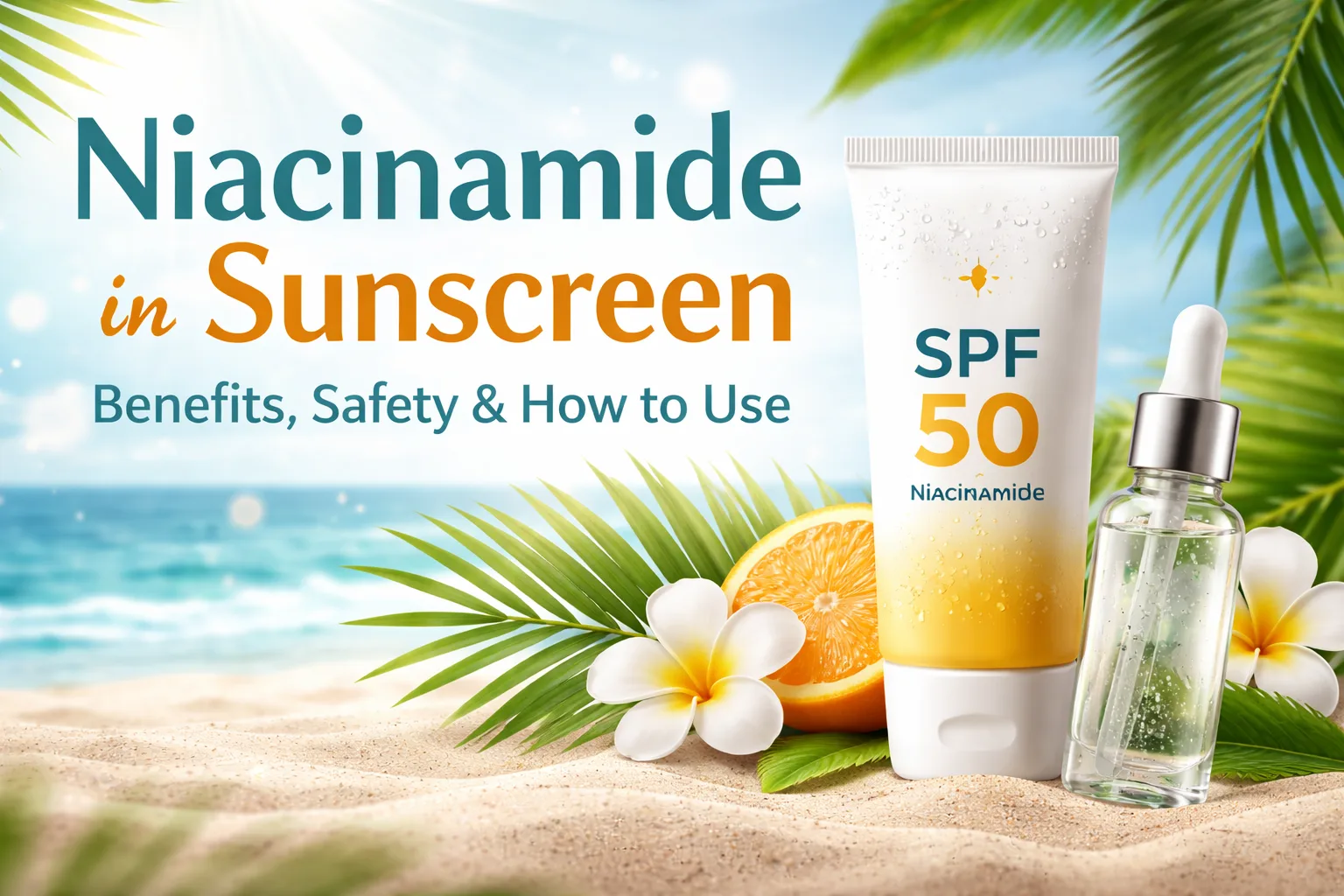
Niacinamide in Sunscreen: Pros, Cons & How to Use

8 min read
niacinamide in sunscreen

In this Article

  • Why people ask about niacinamide in sunscreen
  • What is niacinamide, in simple terms?
  • Why niacinamide is added to sunscreen
  • How niacinamide works alongside UV filters
  • Benefits of niacinamide in sunscreen
  • Limitations you should understand
  • What concentration of niacinamide is typical in sunscreen?
  • Is niacinamide in sunscreen safe for daily use?
  • Who should be cautious with niacinamide in sunscreen?
  • Pregnancy and niacinamide in sunscreen
  • Common myths about niacinamide in sunscreen
  • How to use sunscreen with niacinamide correctly
  • Can you combine niacinamide sunscreen with other actives?
  • Signs you should stop using niacinamide sunscreen
  • FAQs
  • Takeaway: A supportive ingredient, not a hero
  • Keep The Vibe Going

Why people ask about niacinamide in sunscreen

If you are scanning sunscreen labels today, you will likely notice niacinamide listed alongside UV filters. This raises a fair question: what exactly does niacinamide do in a sunscreen, and is it beneficial for daily use?

Niacinamide is not a sunscreen filter. It does not block or absorb UV rays. However, it is increasingly added to sunscreens because it can support skin barrier health, help the skin cope with UV-induced stress, and improve tolerability for some users. At the same time, it is not suitable for everyone, and more is not always better.

This article explains how niacinamide works in sunscreen, when it helps, when it does not, and how to use it safely. The goal is clarity, not hype.


What is niacinamide, in simple terms?

Niacinamide is a biologically active form of vitamin B3. In the skin, it plays a role in cellular energy production, barrier repair, and inflammatory regulation. Unlike exfoliating acids or retinoids, it does not increase skin turnover or cause photosensitivity.

Think of niacinamide as a “support ingredient.” It does not act dramatically on its own, but it helps skin function more efficiently under stress. UV exposure is one of the biggest stressor skins faces daily, which is why niacinamide often appears in modern sunscreen formulas.


Also Read: Meet Niacinamide for Skin | Skincare’s Star Ingredient


Why niacinamide is added to sunscreen

Sunscreen protects. Niacinamide supports.

Sunscreen’s primary job is UV protection. Niacinamide’s role is secondary but complementary.

When skin is exposed to UV radiation, even with sunscreen on, low-level oxidative stress and inflammation still occur. Niacinamide can help the skin manage this stress more effectively by:

  • Supporting the skin barrier, which reduces moisture loss after sun exposure
  • Helping calm low-grade inflammation triggered by UV rays
  • Supporting DNA repair pathways indirectly (it does not repair DNA itself)

This is why niacinamide is often included in sunscreens designed for daily, long-wear use rather than beach-only formulas.


How niacinamide works alongside UV filters

UV filters either absorb, reflect, or scatter ultraviolet radiation. Niacinamide does none of these. Instead, it works inside the skin.

Research suggests niacinamide can help replenish cellular energy (ATP) that becomes depleted after UV exposure. It also supports ceramide production, which strengthens the skin barrier. A healthier barrier can mean less redness, dryness, and sensitivity over time.

This does not mean niacinamide makes sunscreen “stronger.” SPF comes only from UV filters. Niacinamide simply helps skin tolerate daily UV exposure better for some people.


Also Read: Niacinamide Concentration Guide: What % Works Best


Benefits of niacinamide in sunscreen

1. Better barrier resilience with daily sun exposure

Daily sunscreen use can sometimes feel drying, especially for people with compromised barriers. Niacinamide may help counteract this by improving barrier lipid synthesis.

Over time, some users notice less tightness and flaking compared to sunscreens without barrier-support ingredients.

2. Calmer-looking skin during sun exposure

UV radiation can trigger redness, especially in sensitive or acne-prone skin. Niacinamide’s anti-inflammatory properties may help reduce visible redness for some users.

This is particularly relevant for people who experience low-level irritation from mineral or hybrid sunscreens.

3. Support for uneven tone caused by sun stress

Niacinamide is often discussed for pigmentation support. In sunscreen, its role is preventive rather than corrective.

By helping skin respond more evenly to UV stress, niacinamide may support long-term tone stability. It does not fade sunspots on its own, and it does not replace targeted pigmentation treatments.

4. Improved wear comfort for oily and acne-prone skin

Niacinamide can help regulate sebum activity in some individuals. In sunscreen formulas, this may translate to a more balanced skin feel over the day.

This is why niacinamide frequently appears in sunscreens marketed toward acne-prone or combination skin.


Also Read: Does Niacinamide Help With Redness and Inflammation? A Science-Led Explanation


Limitations you should understand

Niacinamide does not replace sunscreen

This cannot be overstated. Niacinamide offers no UV protection. If a product relies on niacinamide while compromising on UV filters, it is not an effective sunscreen.

Results are subtle and gradual

Niacinamide in sunscreen works quietly. You should not expect dramatic changes in pigmentation, acne, or texture from sunscreen alone.

Any visible benefits typically appear after consistent use over several weeks to months.

Not everyone tolerates it well

Despite its reputation as a “gentle” ingredient, niacinamide can cause flushing, stinging, or redness in some people, especially at higher concentrations.


Also Read: Can Niacinamide Cause Breakouts? Understanding the Context and Science


What concentration of niacinamide is typical in sunscreen?

Most sunscreens contain niacinamide in the 1–4% range. This is lower than many standalone serums, which may contain 5–10%.

Lower concentrations are intentional. Sunscreen is applied generously and reapplied, so even modest niacinamide levels can be sufficient without increasing irritation risk.

If a sunscreen does not disclose the percentage, it is usually safe to assume it falls within this lower, supportive range.


Is niacinamide in sunscreen safe for daily use?

For most people, yes. Niacinamide is generally well-tolerated when used daily, especially at sunscreen-level concentrations.

That said, tolerance is individual. Daily use does not mean universal suitability.


Who should be cautious with niacinamide in sunscreen?

Very sensitive or reactive skin

Some individuals experience flushing or warmth from niacinamide, particularly if their skin barrier is compromised.

If you have a history of reacting to niacinamide serums, patch testing a niacinamide-containing sunscreen is important.

Rosacea-prone skin

Niacinamide can be helpful for some rosacea-prone users and irritating for others. There is no universal rule.

If flushing increases after application, discontinue use and consult a dermatologist.

Compromised barrier or post-procedure skin

After chemical peels, laser treatments, or active dermatitis, even low levels of niacinamide may sting.

In these phases, a minimal, bland sunscreen without added actives may be more appropriate.


Also Read: Is Niacinamide Good for Sensitive Skin? Risks, Types, and Safe Usage


Pregnancy and niacinamide in sunscreen

Niacinamide is considered pregnancy-safe when used topically. It does not act hormonally and does not penetrate deeply into systemic circulation.

As always, if you are pregnant and managing skin conditions, it is reasonable to review your routine with a dermatologist.


Common myths about niacinamide in sunscreen

Myth 1: Niacinamide boosts SPF

It does not. SPF is determined solely by UV filters and their tested concentration.

Myth 2: Niacinamide repairs sun damage

Niacinamide can support skin recovery processes, but it does not reverse existing sun damage or replace medical treatments.

Myth 3: More niacinamide means better protection

Higher concentrations do not improve UV defense and may increase irritation risk.


How to use sunscreen with niacinamide correctly

Application order in the morning

A simple AM routine works best.

Cleanser → hydrating serum (optional) → moisturizer (if needed) → sunscreen with niacinamide.

If your sunscreen is moisturizing enough, you may skip a separate moisturizer.

How much to apply

Use the standard guideline: two finger lengths for the face and neck. Niacinamide content does not change application quantity.

Reapplication

Reapply sunscreen every two to three hours with sun exposure. Reapplication does not “overdose” niacinamide at typical sunscreen concentrations.


Recommended Read: Should You Apply Niacinamide on Damp or Dry Skin? 5 Do’s and Don’ts


Can you combine niacinamide sunscreen with other actives?

With vitamin C

Generally compatible. If your skin is sensitive, apply vitamin C first, allow it to absorb, then apply sunscreen.

With retinoids

Retinoids are usually used at night. There is no conflict with using niacinamide sunscreen in the morning.

With exfoliating acids

Using strong acids in the morning alongside sunscreen can increase irritation risk. If acids are part of your routine, reserve them for night use.


Signs you should stop using niacinamide sunscreen

  • Persistent stinging or burning
  • Sudden flushing that does not settle
  • Worsening redness over several days
  • New irritation despite adequate moisturizing

If the reaction does not resolve after stopping use, seek advice from a dermatologist.


FAQs

Q: Is niacinamide in sunscreen good for acne-prone skin?

A: It can be helpful for some people because it supports barrier health and oil balance. However, it does not treat acne directly.

Q: Can niacinamide sunscreen cause purging?

A: No. Niacinamide does not increase cell turnover, so purging is unlikely. Breakouts usually indicate irritation or formula incompatibility.

Q: Is mineral or chemical sunscreen better with niacinamide?

A: Niacinamide can be used in both. Formula quality matters more than filter type.

Q: Can I skip my niacinamide serum if my sunscreen contains it?

A: Often yes, especially in the morning. Sunscreen application already delivers sufficient exposure for support benefits.

Q: Does niacinamide reduce tanning?

A: It does not prevent tanning directly. Consistent sunscreen use is what limits tanning.

Q: Is niacinamide in sunsreen safe for long-term use?

A: Yes for most users, provided the formula suits your skin and does not cause irritation.


Recommended Read: Sunscreen Guide: Nykaa’s Top 7 Picks and SPF Secrets


Takeaway: A supportive ingredient, not a hero

Niacinamide in sunscreen is best understood as a supporting player. It does not replace UV filters, and it does not dramatically change skin on its own. What it can do is help skin cope better with daily sun exposure, improve comfort, and support long-term barrier health for many users.

If your skin tolerates niacinamide well, a sunscreen containing it can be a sensible choice for everyday use. If your skin reacts, there is no loss in choosing a simpler formula. Sun protection works when it is consistent, tolerable, and sustainable over time.

A safety-first approach, realistic expectations, and attention to your own skin’s response matter more than any single ingredient.


Want the latest scoop, exclusive deals, and skincare secrets? Follow us on WhatsApp and never miss a glow-up moment!
Join Us on WhatsApp

Keep The Vibe Going

  • Ingredient Spotlight: Why Niacinamide Is a Summer Essential
  • Skincare Layering 101: The Correct Order for Maximum Benefits
  • Inside the Pink Edit: WishCare’s Science-Backed Formulas Worth Every Click This Hot Pink Nykaa Sale
  • Unveiling the Truth: Are There Side Effects of Derma Co Niacinamide Serum? A Comprehensive Guide
  • A Comprehensive Beginner’s Guide to Skincare: Nurturing Your Skin’s Health and Radiance
  • Best Skincare Routine for Oily Skin: Expert-Backed Guide

Like this:

Like Loading…
Tags: acne prone skin sunscreen Anti Aging Skincare Broad Spectrum Sunscreen chemical sunscreen Daily Sunscreen dermatology skincare face sunscreen how to use sunscreen Mineral Sunscreen Niacinamide Niacinamide Benefits for Skin niacinamide in sunscreen niacinamide skincare oily skin sunscreen Sensitive Skin Sunscreen skin barrier repair Skincare Ingredients Skincare Routine SPF skincare Sun Protection sunscreen ingredients sunscreen with niacinamide UV Protection

Post navigation

Previous Recovering From Niacinamide Irritation: What Works
Next Is Salicylic Acid Safe for Daily Use? A Science-First, Skin-Safe Guide

Related Stories

The Symptoms Women Have Started Calling Normal symptoms women normalize
12 min read
  • BEAUTY

The Symptoms Women Have Started Calling Normal

Can Face Oils Replace Moisturizer? Dermatologists Explain the Difference Dermatologist-explaining-whether-face-oils-can-replace-moisturizer-—-face-oil-vs-moisturizer-skincare-guide.
13 min read
  • BEAUTY

Can Face Oils Replace Moisturizer? Dermatologists Explain the Difference

What Is Exosome Skin Treatment? The Science Behind Regenerative Skin Repair exosome skin treatment
11 min read
  • Aesthetics

What Is Exosome Skin Treatment? The Science Behind Regenerative Skin Repair

Beauty on Your Plate

  • 3 Super Seeds for Hair Growth That Strengthen Hair Naturally
  • Natural Beauty Food Alternatives: Skip Supplements for Glowing Skin & Healthy Hair
  • Best Anti-Aging Foods for Younger-Looking Skin: Your Ultimate Guide

More Than Skin Deep

  • Eggshell Parenting: The Silent Emotional Strain on Children
  • Nurturing Connection: The Power of Healthy Boundaries in Building Strong Relationships
  • 10 Telltale Signs You’ve Found An Ideal Husband
  • Five Little Things-To-Do for a Stronger Marriage
  • Things to Teach Your Child: 10 Essential Life Lessons for Success

Who We Are

  • About Us
    • Team
  • Media Kit
  • WhatsApp Channel
  • Advertise
  • Press Inquiries & Submissions
  • WhatsApp
  • Facebook
  • Instagram
  • Pinterest
  • YouTube

Editorial

The Symptoms Women Have Started Calling Normal symptoms women normalize
12 min read
  • BEAUTY

The Symptoms Women Have Started Calling Normal

Can Face Oils Replace Moisturizer? Dermatologists Explain the Difference Dermatologist-explaining-whether-face-oils-can-replace-moisturizer-—-face-oil-vs-moisturizer-skincare-guide.
13 min read
  • BEAUTY

Can Face Oils Replace Moisturizer? Dermatologists Explain the Difference

What Is Exosome Skin Treatment? The Science Behind Regenerative Skin Repair exosome skin treatment
11 min read
  • Aesthetics

What Is Exosome Skin Treatment? The Science Behind Regenerative Skin Repair

Does Hard Water Cause Hair Fall? A Dermatologist Breaks Down the Real Science
9 min read
  • BEAUTY

Does Hard Water Cause Hair Fall? A Dermatologist Breaks Down the Real Science

Join The Tribe

Beauty, Curated Just for You

Legal & Policies

  • Essential Pages
    • Privacy Policy
    • Cookies Policy
    • Terms of Use
    • Disclaimer
    • Nykaa Affiliate Terms
Copyright 2026 © All rights reserved. | DarkNews by AF themes.
%d