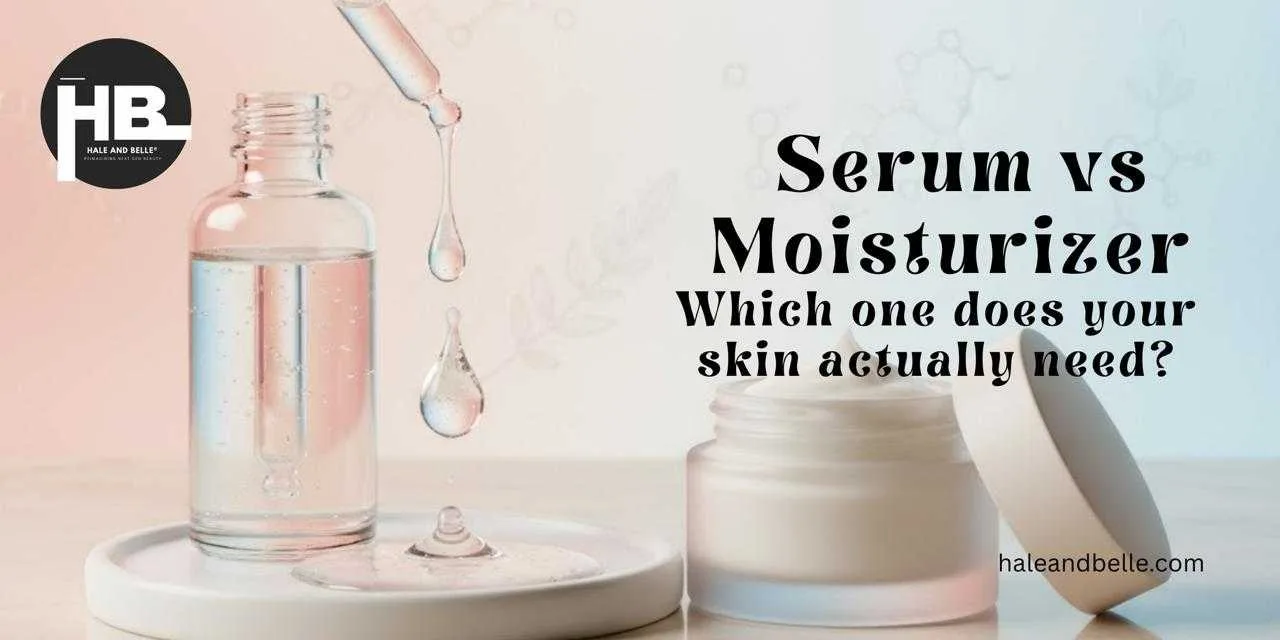
Wondering whether to use a serum, a moisturizer, or both? Serums deliver concentrated active ingredients deep into the skin to target specific concerns like pigmentation, fine lines, and acne, while moisturizers hydrate and strengthen the skin barrier. For optimal results, most skin types benefit from layering serum first, then moisturizer.
Serum vs Moisturizer: Key Differences Explained
Serum vs moisturizer comes down to function and depth. A serum is a lightweight, highly concentrated treatment formulated to deliver active ingredients deeper into the skin to target concerns like pigmentation, acne, fine lines, or dullness. A moisturizer hydrates the surface and strengthens the skin barrier to prevent moisture loss. They serve different roles — and work best when layered together.
Side-by-Side Comparison
| Feature | Serum | Moisturizer |
|---|---|---|
| Primary Function | Targets specific skin concerns with concentrated actives | Hydrates skin and reinforces the protective barrier |
| Texture | Lightweight, fluid, or gel-like | Cream, lotion, or gel-cream |
| Molecule Size | Smaller molecules designed for deeper penetration | Larger molecules that sit on the surface |
| Common Ingredients | Vitamin C, Niacinamide, Retinol, Hyaluronic Acid | Ceramides, Glycerin, Emollients, Occlusives |
| Main Goal | Treat and improve specific skin issues | Prevent transepidal water loss (TEWL) and maintain hydration |
| Can It Replace the Other? | No — lacks strong barrier protection | No — does not deliver high-concentration actives deeply |
The Core Difference in Simple Terms
• Serums treat.
• Moisturizers protect.
• Serums deliver actives into the skin.
• Moisturizers seal hydration and strengthen the barrier.
• For optimal results, most skin types benefit from using both.
If your goal is transformation — glow, clarity, anti-aging, or pigmentation correction — a serum drives that change. If your goal is comfort, barrier strength, and resilience, a moisturizer locks it in. Used together, they create precision plus protection — which is why dermatologists typically recommend layering rather than choosing one over the other.
In this Article
Do You Need Both Serum and Moisturizer?
In most cases, yes — because serums and moisturizers perform fundamentally different functions. A serum treats specific skin concerns at a deeper level, while a moisturizer protects the surface and prevents moisture loss. Skipping one usually means compromising either correction or protection.
Can a Serum Replace a Moisturizer?
No. Even hydrating serums, including those with hyaluronic acid, do not form a strong occlusive barrier. Without a moisturizer on top, water can evaporate from the skin — a process known as transepidermal water loss (TEWL). Over time, this may leave skin dehydrated or sensitized.
Exception: Very oily skin in high humidity may tolerate serum alone during the day — but barrier support is still recommended at night.
Can a Moisturizer Replace a Serum?
Not effectively. While some moisturizers contain active ingredients, they are typically formulated for surface hydration, not high-potency correction. If your goal is reducing pigmentation, fine lines, acne, or dullness, a targeted serum delivers stronger and more focused results.
A moisturizer maintains the skin. A serum improves it.
When Is It Okay to Skip One?
There are limited scenarios where simplifying is reasonable:
• Extremely oily, acne-prone skin in humid climates may use a treatment serum with a lightweight gel moisturizer only at night.
• Minimal routines may rely on a moisturizer with built-in actives and alternate serum use every other day.
• Very sensitive or post-procedure skin (after peels or lasers) may temporarily prioritize a barrier-repair moisturizer before reintroducing serums.
Outside of these cases, layering both provides the most balanced results.
The Practical Verdict
If your skin is balanced and you have no major concerns, a well-formulated moisturizer may be sufficient. But if you are actively targeting glow, aging, breakouts, or uneven tone, combining a serum with a moisturizer delivers more consistent, long-term improvement.
Treatment plus protection — that is the strategic approach.
Benefits of Using Serum and Moisturizer Together
- Enhanced active delivery + barrier support
- More effective absorption of targeted ingredients
- Better hydration for dry or mature skin
- Flexibility for layering depending on skin concern
- Improved long-term skin health via complementary functions
Serum or Moisturizer First? Correct Layering Order
Knowing the correct layering order ensures your skin receives both targeted treatment and lasting hydration. Applying products in the wrong sequence can reduce absorption and limit results.
Step 1: Cleanse Your Face
Start with a gentle cleanser to remove dirt, oil, and makeup. Pat your skin dry with a soft towel — damp skin helps serums absorb better.
Step 2: Apply Serum First
• Use 2–3 pumps of your serum.
• Gently massage it into the face and neck.
• Serums are lightweight and formulated with small molecules to penetrate deeply.
• Wait 30–60 seconds to allow absorption before applying moisturizer.
Step 3: Follow With Moisturizer
• Choose a moisturizer suited to your skin type (cream, gel, or lotion).
• Apply evenly across the face and neck.
• Moisturizers seal in the serum and prevent transepidermal water loss (TEWL).
• For morning routines, finish with a broad-spectrum SPF.
Step 4: Adjust Based on Skin Type
• Oily or combination skin: Pair serum with a lightweight gel moisturizer to avoid heaviness.
• Dry or mature skin: Use a richer cream to lock in hydration and strengthen the barrier.
• Sensitive skin: Apply minimal active serums first, then a soothing moisturizer to reduce irritation risk.
Quick Layering Tip
Think lightest to heaviest: serum (treatment) → moisturizer (barrier) → SPF (protection). This ensures maximum active delivery and optimal barrier function.
Editor’s Picks: The Best Serums & Moisturizers to Shop on Nykaa Right Now
Here are 5 excellent picks:
Nykaa SkinRX Hydrating Face Serum:
A featherlight formula infused with hyaluronic acid that quenches thirsty skin without greasiness. Its fast-absorbing texture delivers a fresh, plump finish, leaving the skin supple and dewy all day.
Foxtale Vitamin C Serum & Moisturizer Combo:
This smart duo pairs a potent Vitamin C serum with a barrier-loving moisturizer. The synergy brightens dull skin, boosts collagen, and seals in luminosity—an effortless two-step for daily radiance.
Plum Niacinamide Serum & Moisturizer Duo:
For those targeting blemishes, oil-balance and overall skin-texture improvement. The niacinamide serum and moisturizer together form a simplified two-step routine (linking to our layering advice).
Nykaa Naturals Brightening Face Serum:
A lightweight, fast-absorbing serum crafted to revive dull, tired-looking skin. This brightening formula blends botanical extracts and skin-loving actives to enhance clarity, boost radiance, and improve overall texture. With consistent use, it helps fade uneven tone, softens dark spots, and leaves the skin fresh, hydrated, and naturally luminous. Perfect for anyone seeking a simple yet effective glow-boosting serum to fit seamlessly into their everyday routine.
Nykaa Naturals Face Serum Jelly:
A fresh gel-serum hybrid with a juicy texture that melts instantly into the skin. Lightweight yet hydrating, it provides a burst of moisture and subtle radiance—perfect for layering under makeup.
Serum vs Moisturizer for Different Skin Types
Your skin type determines how you should layer serums and moisturizers. Choosing the right combination ensures effective absorption, hydration, and long-term results. Here’s a breakdown by skin type:
Oily Skin
- Serum: Lightweight, water-based or gel serums with niacinamide or hyaluronic acid.
- Moisturizer: Non-comedogenic gel or lotion to lock in hydration without heaviness.
- Tip: Focus on balancing oil while maintaining barrier protection; avoid heavy creams.
Dry Skin
- Serum: Hydrating serums with hyaluronic acid, glycerin, or peptides to boost moisture retention.
- Moisturizer: Rich creams with ceramides, shea butter, or squalane to prevent transepidermal water loss (TEWL).
- Tip: Layer while skin is slightly damp to maximize absorption.
Acne-Prone Skin
- Serum: Targeted serums with salicylic acid, niacinamide, or vitamin C to address breakouts and pigmentation.
- Moisturizer: Lightweight, non-comedogenic moisturizers with soothing ingredients like aloe vera or ceramides.
- Tip: Avoid heavy, occlusive products that can clog pores.
Mature Skin
- Serum: Anti-aging serums with retinol, peptides, or antioxidants to improve elasticity and reduce fine lines.
- Moisturizer: Creams rich in emollients and barrier-supporting ingredients to lock in hydration.
- Tip: Apply serum first, then moisturizer, and always follow with SPF in the morning.
Sensitive Skin
- Serum: Minimalist serums with calming ingredients like niacinamide or hyaluronic acid.
- Moisturizer: Fragrance-free, hypoallergenic moisturizers that reinforce the skin barrier.
- Tip: Introduce new actives slowly; always patch test to avoid irritation.
Key Takeaway
No matter your skin type, the combination of a targeted serum plus a compatible moisturizer provides both correction and protection. Adjust textures and formulations to suit your skin’s unique needs, ensuring maximum benefit and comfort.
Budget-Friendly and Minimal Routine Alternatives
- Use a few drops of hyaluronic acid serum (humectant) followed by a lightweight gel-moisturizer.
- Mix your serum with aloe vera gel to bolster hydration for summer.
- For face-yoga lovers: apply your serum post-face-yoga while circulation is high, then lock in with moisturizer—for deeper delivery plus barrier support. See Best Face Yoga for Jawline Definition.
- Minimal routine: If budget/time is constrained, choose a well-formulated moisturizer with built-in actives and alternate serum use every other night.
Who Should Be Careful with Serums or Moisturizers?
Frequently Asked Questions
A: Only if your skin needs active treatment plus moisture; for oily or well-hydrated skin you may skip the moisturizer or use a gel version.
A: Your skin might lack the barrier protection of a moisturizer—leading to moisture loss or sensitivity.
A: No—moisturizers don’t penetrate as deeply or deliver concentrated actives the way serums do.
A: Always serum first (lightest) then moisturizer (heavier).
A: If you have very sensitive, irritated, or freshly treated skin (chemical peels, lasers), use simple barrier-moisturizer first and introduce serum later.
Expert Insight: When Serum and Moisturizer Become Non-Negotiable
“Your serum trains the skin to glow; your moisturizer guards that glow. One builds strength, the other locks it in. Together, they’re non-negotiable.” – Neisha Arora
When you’re aiming for sustained glow and barrier resilience—especially under Delhi’s shifting humidity—this layered combo is non-negotiable. Choose your serum based on concern (dullness, acne, fine lines) and then lock it in with a moisturizer suited to your climate and skin-type.
Final Verdict: Serum vs Moisturizer — What Should You Choose?
In short, the serum vs moisturizer duo is all about precision and protection. Using both ensures your actives go deep while your barrier stays strong. Skipping one only works if your skin is perfectly balanced—and your formulas, foolproof.
Now that you know the why, how, and what of layering, it’s time to elevate your routine. Explore the shopping links above or discover your ideal pairing from Hale and Belle’s curated edit.
So tell us—what’s your skin’s top priority this season? Dullness, breakout marks, or fine lines? Drop your thoughts in the comments below.
Want the latest scoop, exclusive deals, and skincare secrets? Follow us on WhatsApp and never miss a glow-up moment!